
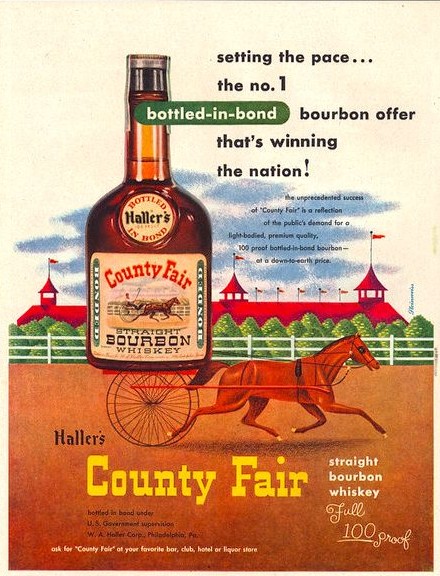
Collectors of antique whiskeys are familiar with the name W.A. Haller & Co., mostly due to the company’s “County Fair” brand of bourbon whiskey. Haller’s County Fair bourbon was bottled in the 1950s through the 1980s by Continental Distilling Co. in Philadelphia, which begs the question, “Why does its label say ‘Distilled by W.A. Haller Co.?’” Who the heck was W.A. Haller?
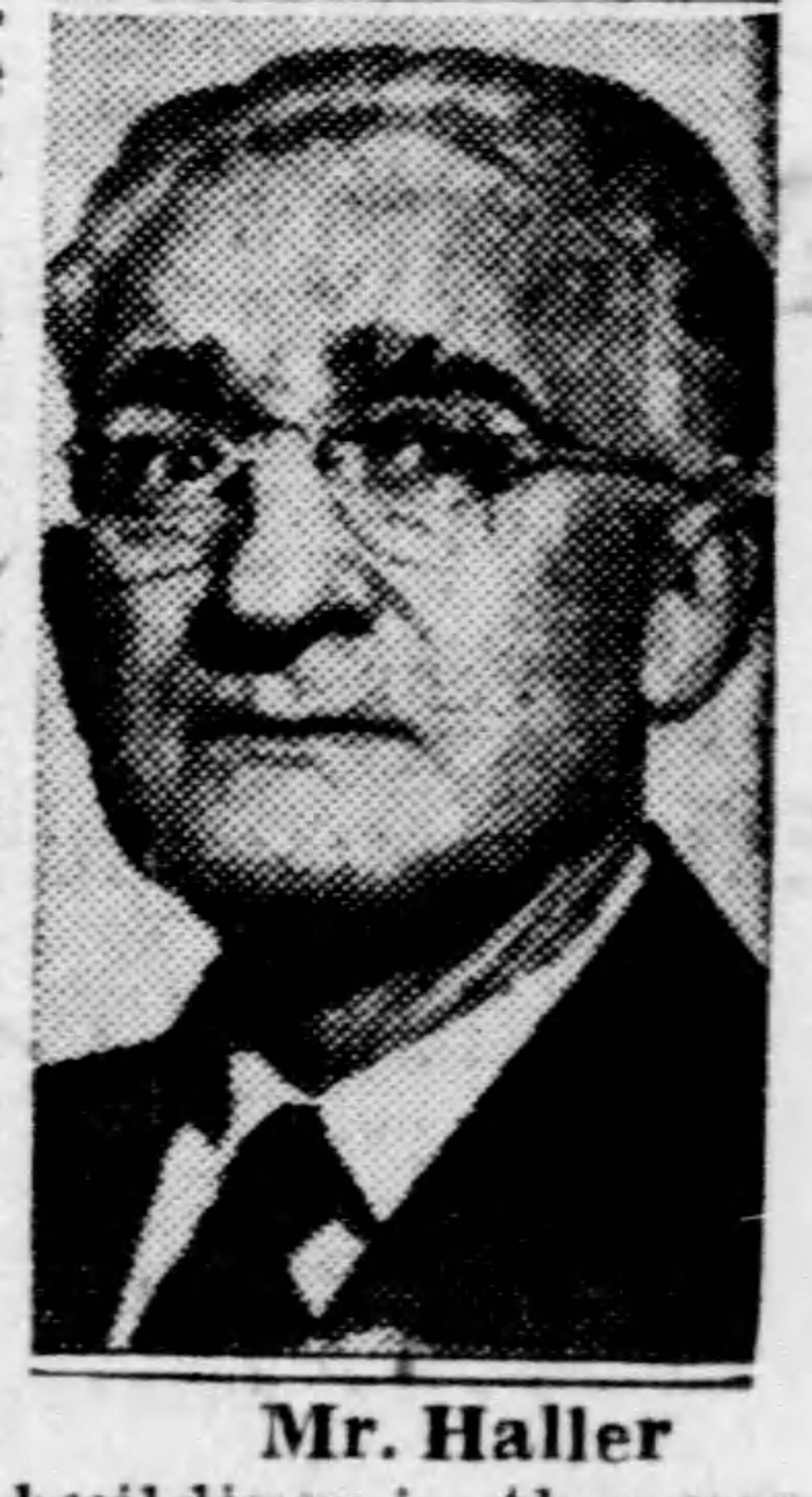
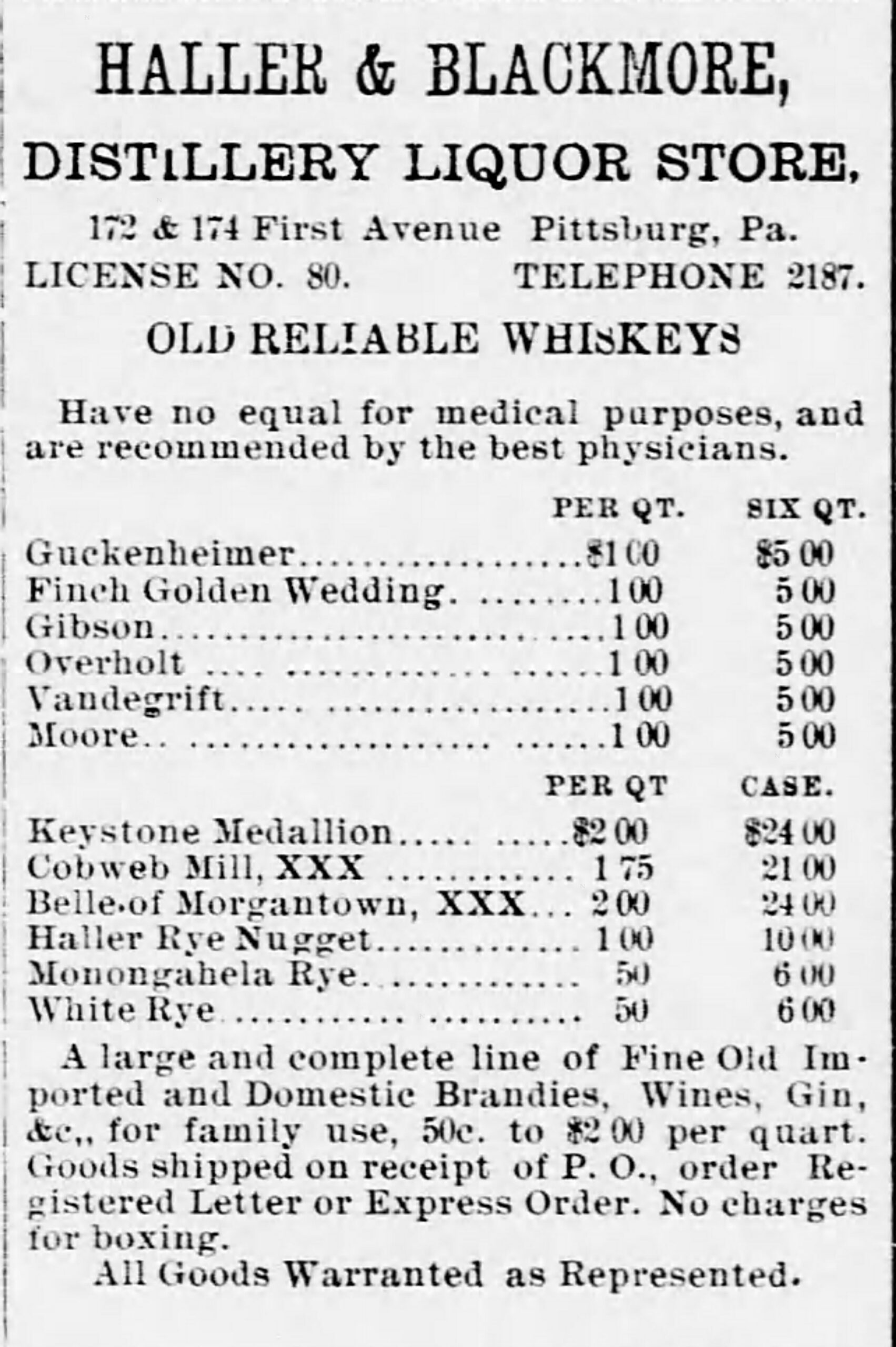
William A. Haller was a wholesale liquor dealer from Pittsburgh, not Philadelphia. He was born on October 10, 1866, the youngest son of Augustine (August) and Philomena (Lutz) Haller. (August emigrated from France, but Philomena was a native Pennsylvanian.) When he came of age, William began working for his older brother, Samuel P. Haller, as a clerk. S.P. Haller, who was 10 years older than William, had been a wholesale liquor dealer in Pittsburgh since at least 1892 when he and his partner, Thomas J. Blackmore, formed the liquor firm of Haller & Blackmore. Samuel and William’s father, Augustine Haller, had been a very influential businessman in Pittsburgh. He ran Haller, Beck & Co. Salt Works, a large firm based in the Manchester District of lower Allegheny County. (Their salt wells were drilled below the bed of the Ohio River.) The firm also manufactured disinfectants and used their mining connections to invest in oil, gas, and metals. In 1894, Samuel P. Haller dissolved his partnership with Blackmore and assumed ownership of their building at Nos. 172-174 First Avenue. William A. Haller continued to work for his brother as the demand for his products began to outpace production. His business outgrew the building, so in 1897, Samuel upgraded to larger, 5-story accommodations at 111 Smithfield Street. 5 years later, with business booming, S.P. Haller relocated again to 1153 Liberty Street. By June 1906, the brothers partnered with Theodore G. Stein to form Samuel P. Haller, Incorporated. (1898 Pittsburgh City Directory shows T.G. Stein working as a bookkeeper for S.P. Haller.) At this point, the company pivots.
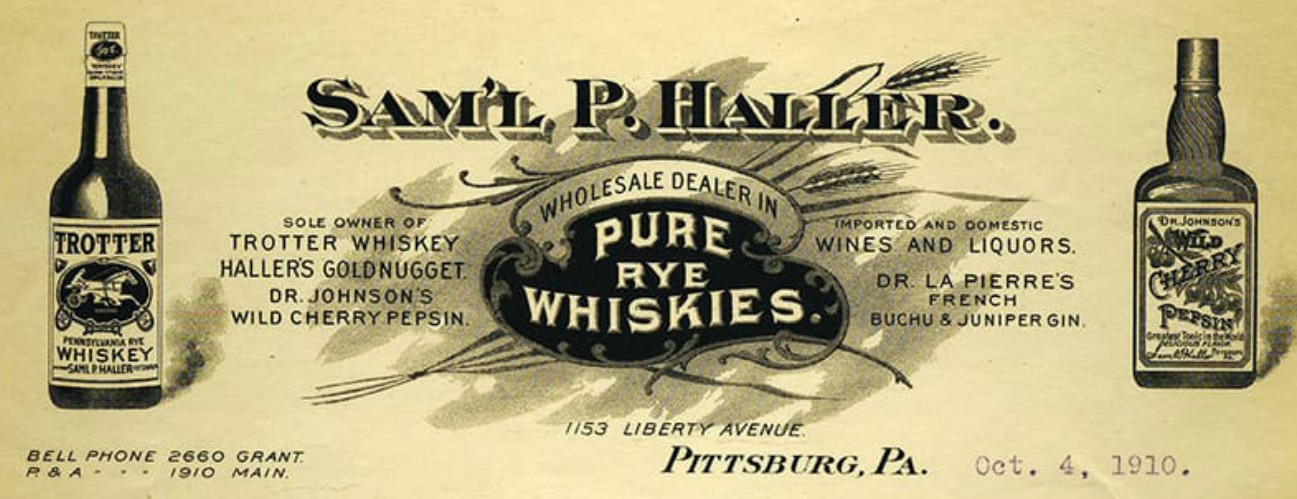
Samuel Haller’s business had always been a rectifying firm. Like nearly every other large-scale, rectifying liquor firm, Haller bought whiskeys/liquors from distilleries and either sold those spirits on consignment or blended his barrels to create his own signature products. In the spring of 1911, Samuel and William’s partner, T.G. Stein, incorporated his own company called the Johnston-Carmichael Company, based in Cincinnati, Ohio. (It is unclear how Stein had connections to Cincinnati. In 1917, articles reveal Stein’s connections to Julius Fleischmann through efforts to produce commercial yeast from beet pulp.) Johnston-Carmichael Co.’s partners included brothers Theodore G. Stein (Beaver Falls, NW of Pittsburgh) and Frank L. Stein (Mt. Oliver, just below Pittsburgh’s Southside), Emmet R. Johnston (Knoxville, just west of Mt. Oliver), John R. Carmichael and W.A. Haller (both of Carnegie, west of Pittsburgh. Haller, more accurately, lived in Green Tree). By September, the Johnston-Carmichael Company purchased the business and property of William H. Holmes, a very prominent, Pittsburgh-based liquor firm with addresses at 332-334 First Ave and 33-335 Water Street- each address located on either side of the Monongahela River. It appears that S.P. Haller retained the rights to his own business because records show that S.P. Haller & Co. was incorporated the following year (1912). William A. Haller, however, chose to partner with this new group of businessmen with connections to Cincinnati. His gamble to strike out on his own would pay off. Samuel’s business, though it had been the foundation upon which other businesses and business relationships had been built, would not last. Samuel Haller died on February 3, 1920, 17 days after Prohibition went into effect. His business and its legacy would dissolve after his passing.
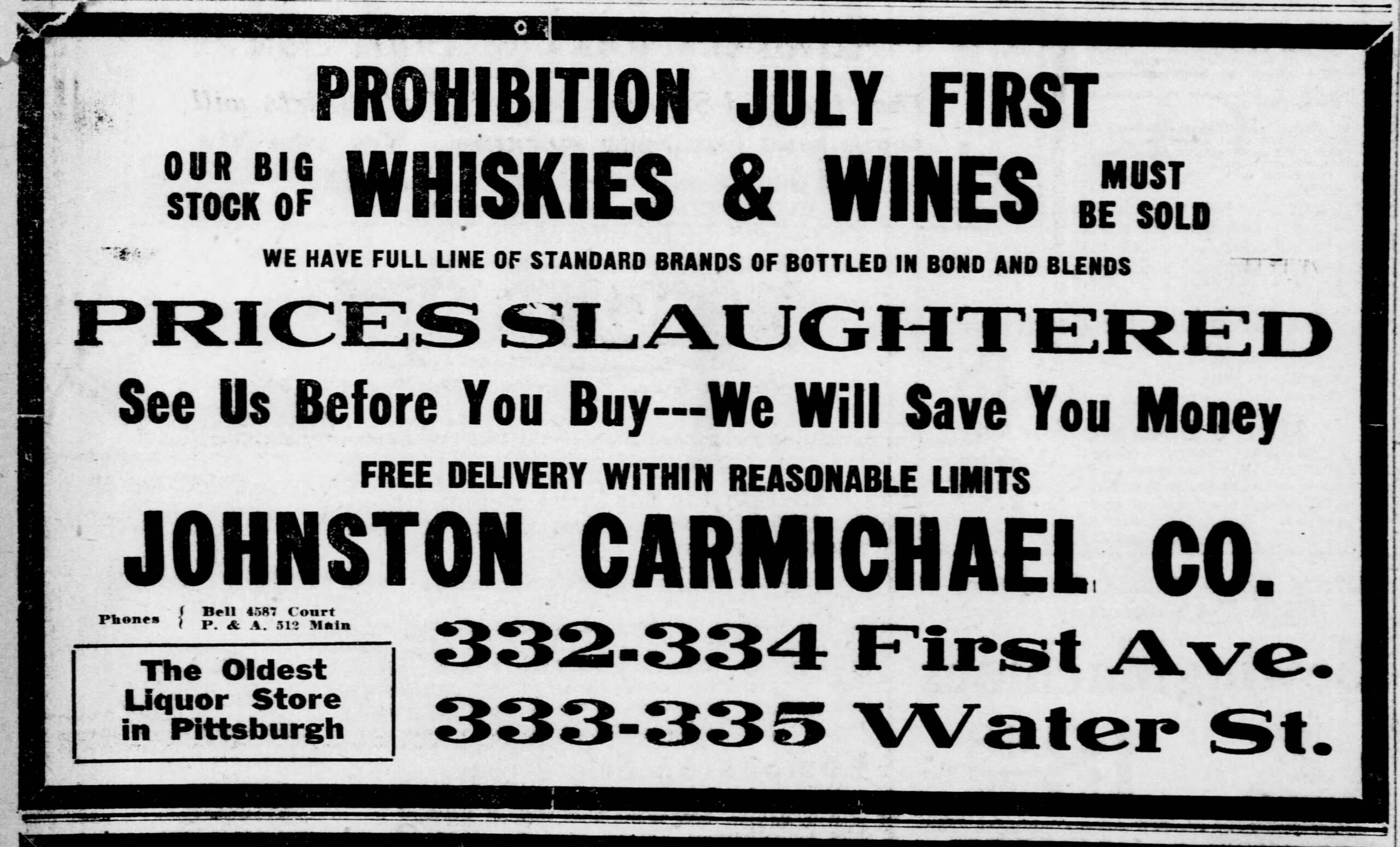
The Johnston-Carmichael Company remained active as wholesale liquor dealers after the onset of Prohibition, selling through legal channels. Frank L. Stein handled warehouse receipts as a broker for the company. In 1924, Theodore G. Stein sold the company to Schenley Distilling Corporation, though he remained on as secretary/treasurer for the firm. The following year, the Johnston-Carmichael Company was dissolved. Frank L. Stein then founded the John R. Carmichael Company and became its president. Theodore Stein founded his own liquor firm at 12 South 12th Steet in Philadelphia but served as president of the Mt. Oliver Ice Company from his offices across the state. William A. Haller served under Stein as the ice company’s secretary/treasurer.
After Repeal, Frank Stein remained vigilant as a representative of his company (John R. Carmichael Co.) in its efforts to denounce Prohibition. He publicly fought against Gifford Pinchot, Pennsylvania’s governor, decrying his plans to create state dispensaries. In the summer of 1934, Theodore G. Stein, Inc. (5309 Diamond Street in Philadelphia) applied for a wholesale liquor license for its distribution warehouse at 1300 Pine Street in Camden, N.J. The Steins were firmly reestablishing their place in the liquor industry from both sides of the state. Meanwhile, William A. Haller, Jr., who was not involved in the liquor trade, was busy defending his father’s honor as a liquor man. He expressed resentment in his rebuttal of an editorial written in the Pittsburgh Press that described the liquor business as rotten. “My father is not a rotten man, nor are his ideals rotten. Yet he was in the liquor business. If you are looking for the true rottenness, the discussion of prohibition comes up immediately.”
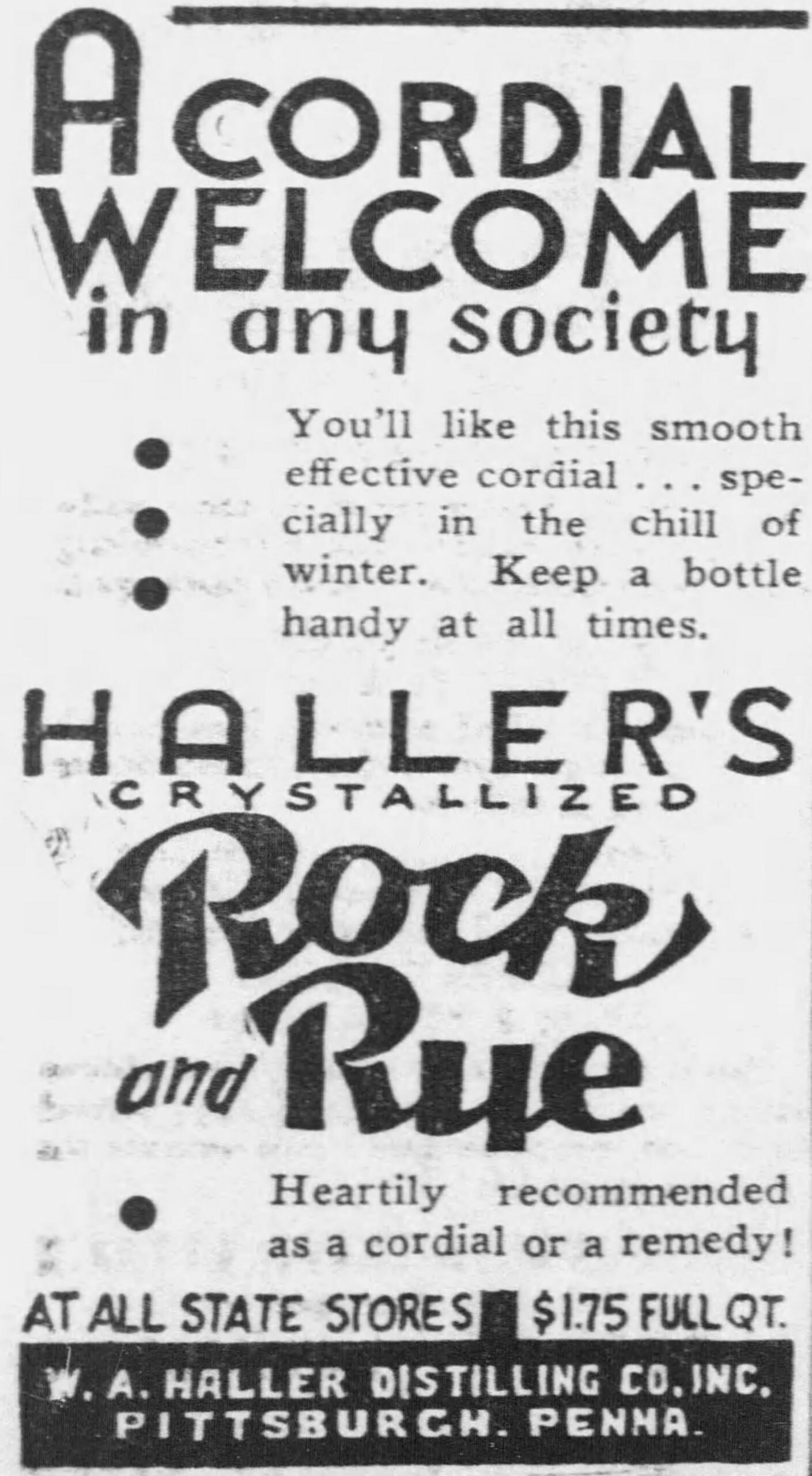
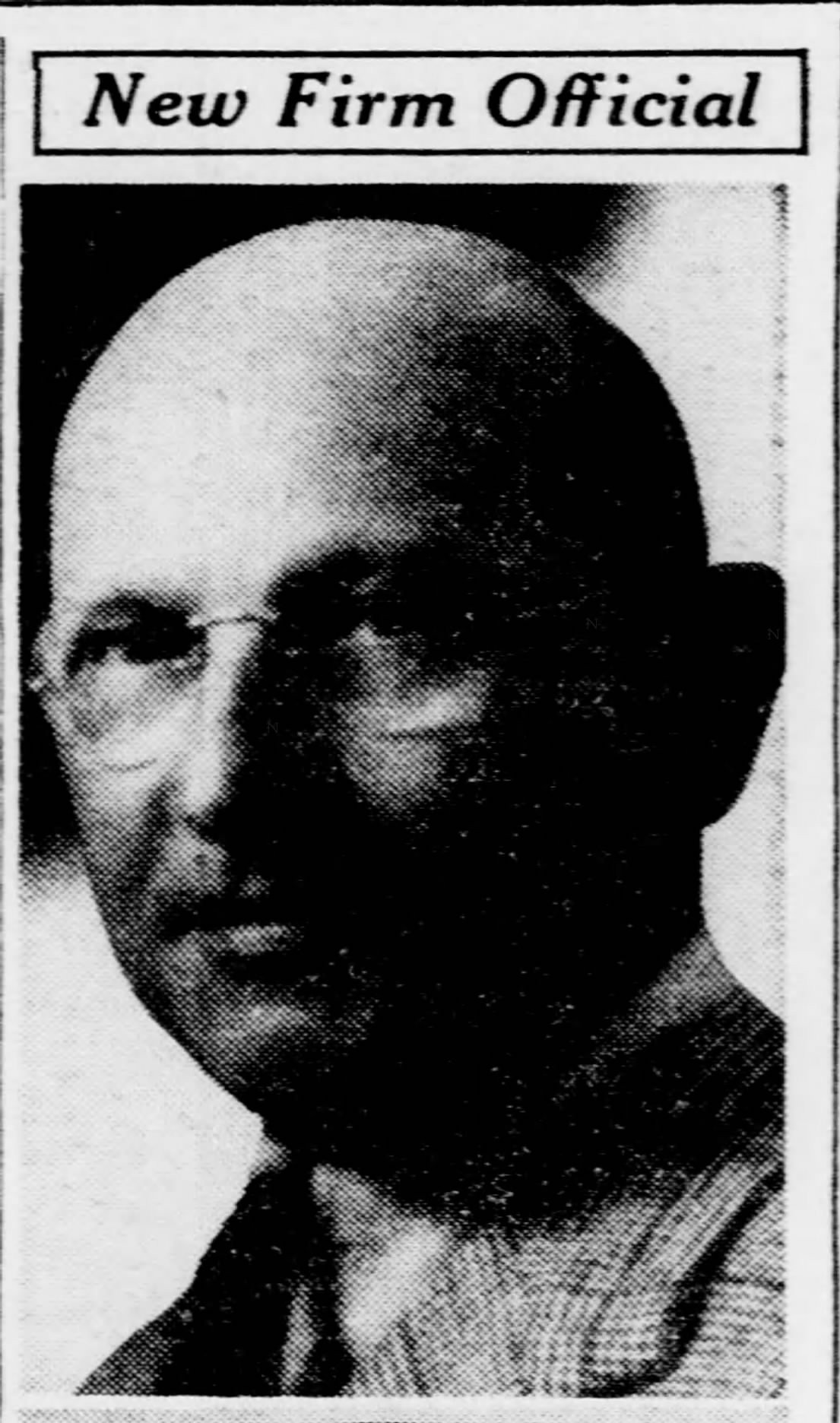
In January 1935, the W.A. Haller Distilling Co., Inc. was incorporated in Pittsburgh with William A. Haller as president, Theodore G. Stein as vice president, and Frank L. Stein as treasurer and chairman of the board. Previously, Frank had been managing Schenley Products Co.’s business in Western Pennsylvania. W.A. Haller & Co.’s new headquarters were at 131-135 Dahlem Street. Haller’s business continued to function as a rectifier with their Crystalized Rock & Rye taking top billing in the advertisements for the company.
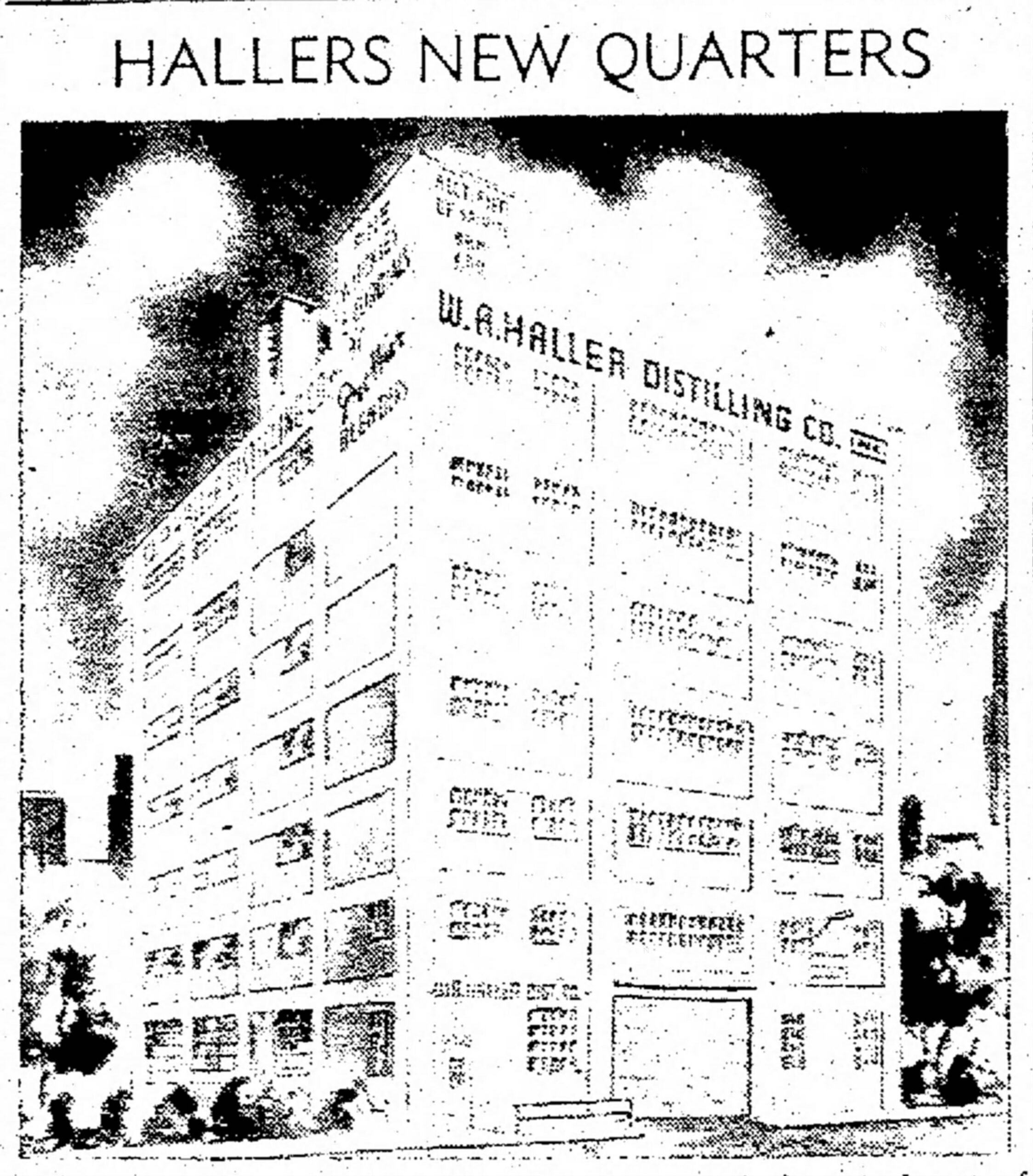
By July 1937, the company was ready to expand. They leased a huge, 35,000 square foot building at 1009 Beech Ave. in Pittsburgh’s North Side and made plans to renovate and improve it.
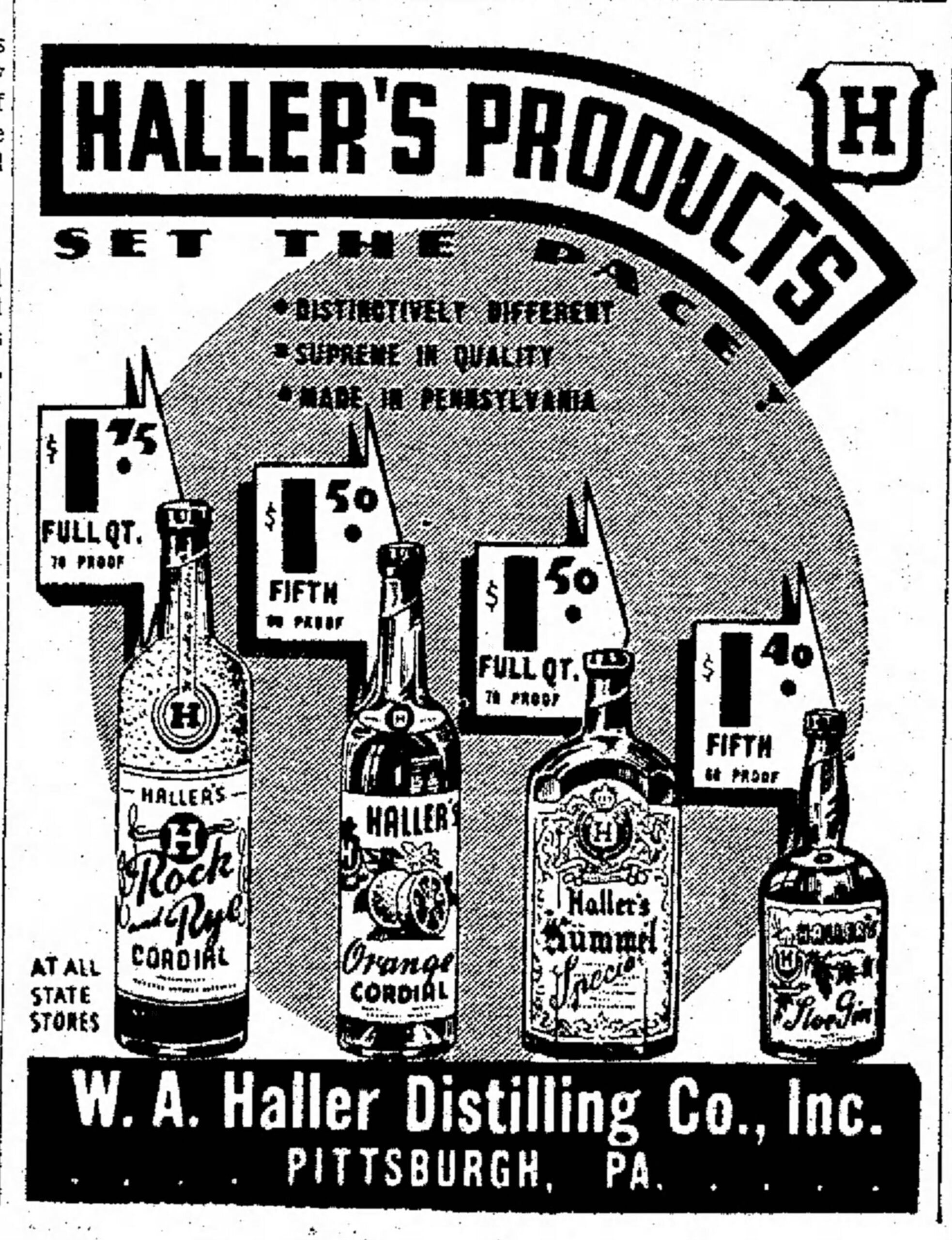
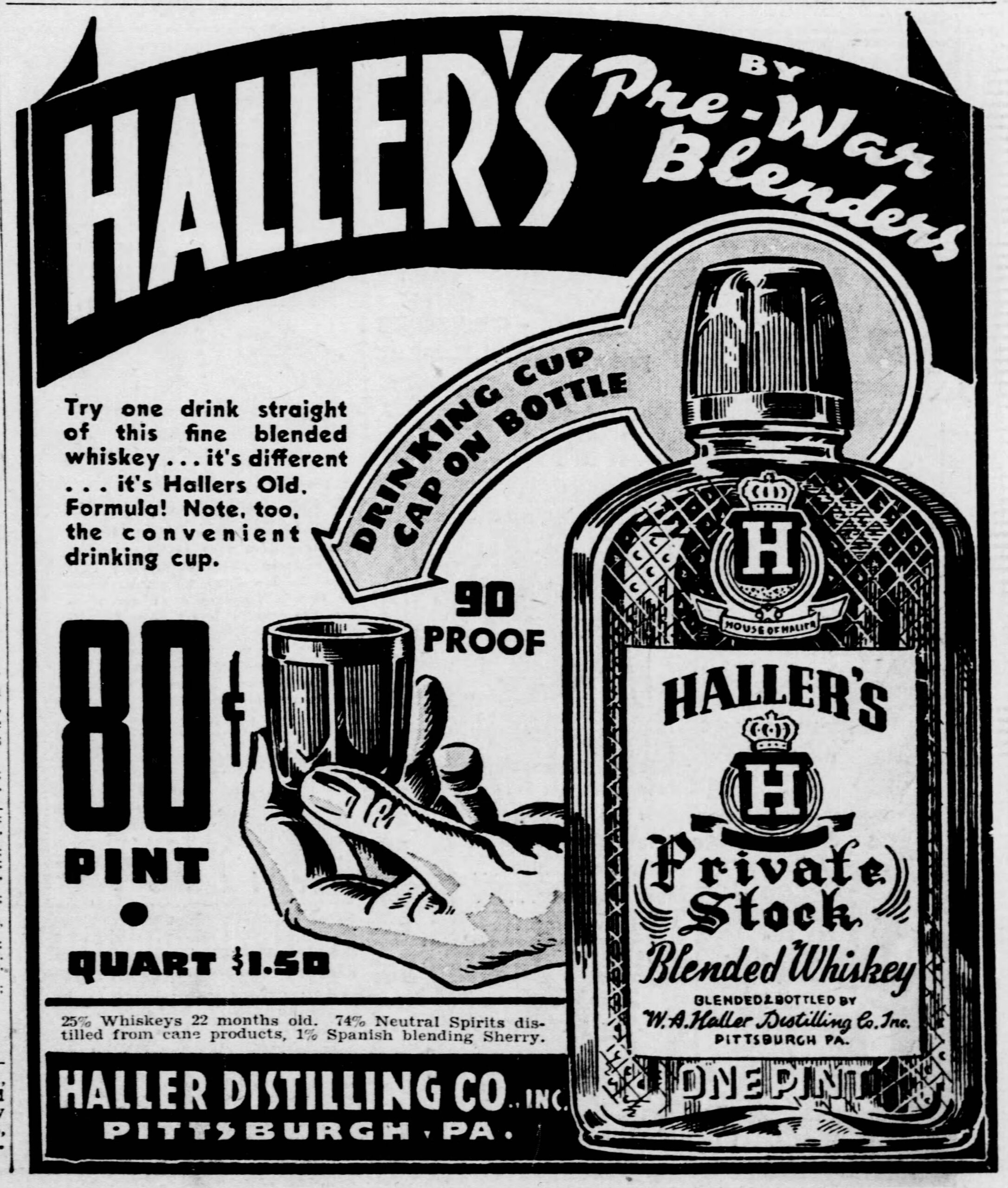
William Haller brought on Emil Clady as their head compounder, the same man who held the role for the Hallers before Prohibition. Theodore Davison served as plant superintendent. The 7-floor building became their blending facility where all vats and containers were efficiently gravity fed from the top down. The company bragged about its “Pre-War” techniques and their insistence upon the re-barreling of spirits once they’d been blended. In addition to their new rectifying house, the company purchased the Old Orchard Distillery in Elverson, Pa. This distillery specialized in brandy production which helped diversify the company’s broad portfolio.
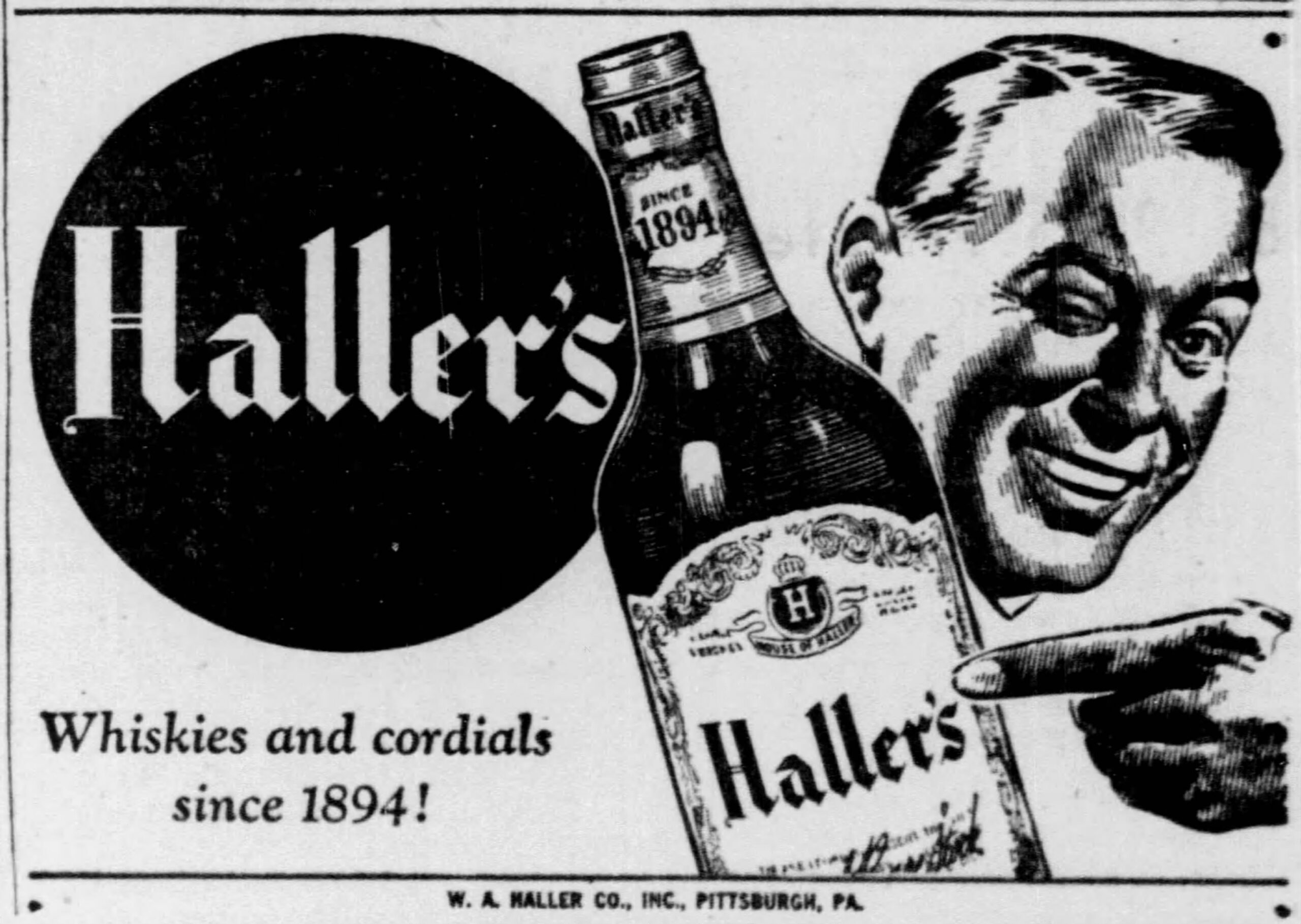
W.A. Haller Distilling Co., Inc. continued to operate out of Pittsburgh for the next decade. It advertised, “Whiskeys and Cordials since 1894!” That date, however, is connected to the establishment of Samuel P. Haller’s business, not to William Haller, who had been his 28-year-old clerk in 1894. The company’s vice president, Theodore Stein, died at the age of 73 in June 1943, passing the torch to his brother, Frank. In March 1947, the W.A. Haller Distilling Corporation was chartered in Dover, Delaware with $20,000 capital. This appears to be the time that the company was absorbed by Publicker Industries in Philadelphia. W.A. Haller joined the Continental Distilling Corp. and the Kinsey Corp. to become another subsidiary of Publicker. The company’s main offices were moved from Pittsburgh to Philadelphia, but William Haller stayed put.
William A. Haller lived to be 81 years old. He died on May 21, 1958 at his home on Green Tree Road in Pittsburgh. The company that continued to bear his name over the next several decades ceased to associate itself with the city where it was born. Most whiskey geeks that know the name “Haller” associate the company with Philadelphia or with Publicker (or even with Medley!). That is the way of the whiskey industry after Prohibition, though. By the 1970s, Haller’s brands began to incorporate everything into their blends- from scotch to Canadian whiskey. When Publicker shut down production at their plants and sold off their brands in 1979, “Haller’s” was picked up by the Medley Distilling Company in Owensboro, Ky.* The bourbons that went into bottles labeled “Haller’s” in 1979 and during the early 80’s were either old stock from Continental or from Owensboro’s Medley Distillery, or DSP #49. Medley and its associated brands were sold to Glenmore Distillers in 1988. In 1991, Glenmore was bought up by National Distillers. The brand fell into obscurity almost immediately after its acquisition by National Distillers. The brand now belongs to Heaven Hill, though they do not use it.
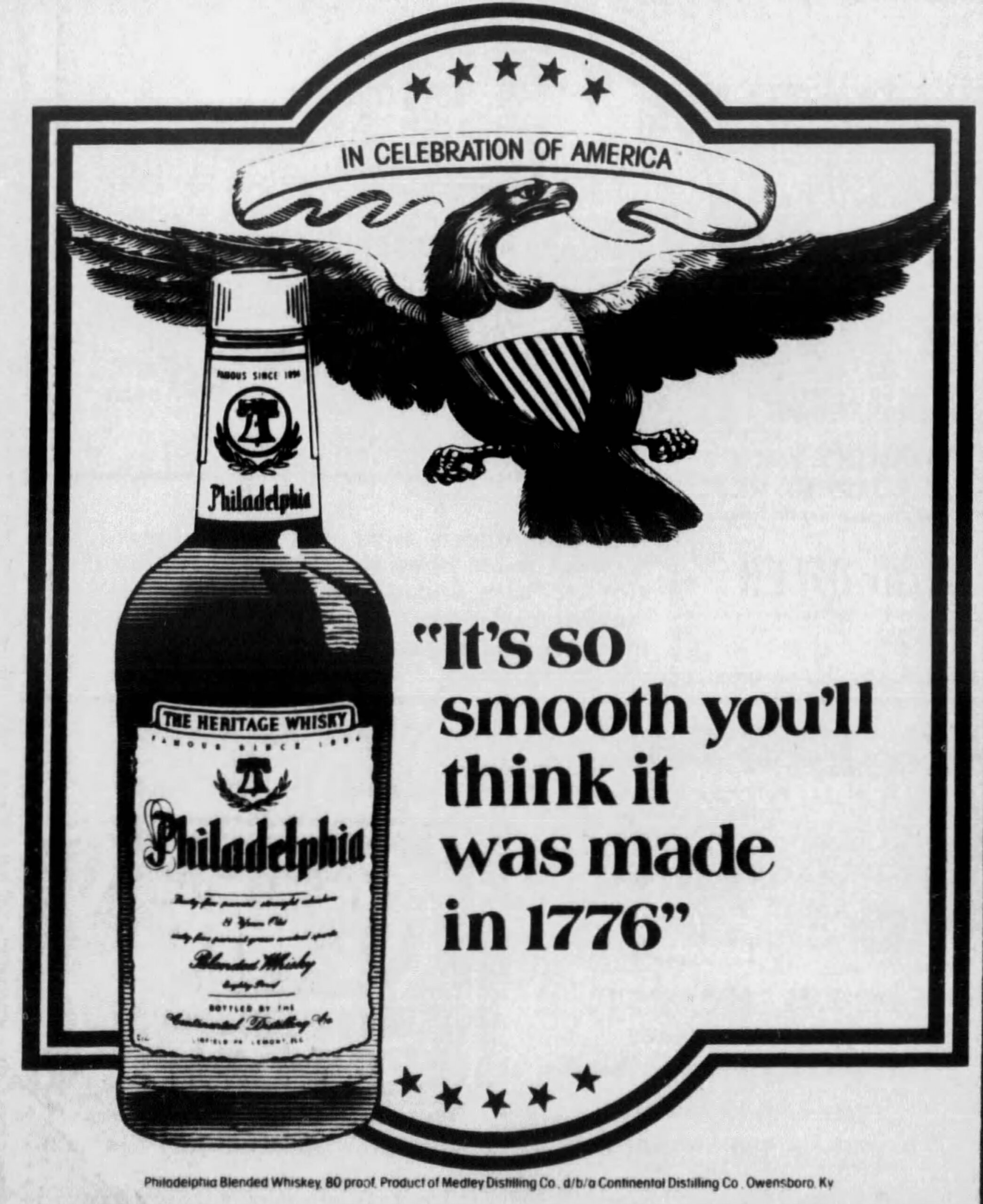
*I have seen several references to Medley buying the Haller brand name in the 1940s and 50s and can find no information to corroborate these claims. If anyone knows has any information that might help make sense of that, please do share it with me!
(@AmericanWhiskeyHistory on Facebook)