The following are posts from my @AmericanWhiskeyHistory page on Facebook. The posts have been separated into 2 parts here, and follow up posts are forthcoming.
Part 1- Introduction
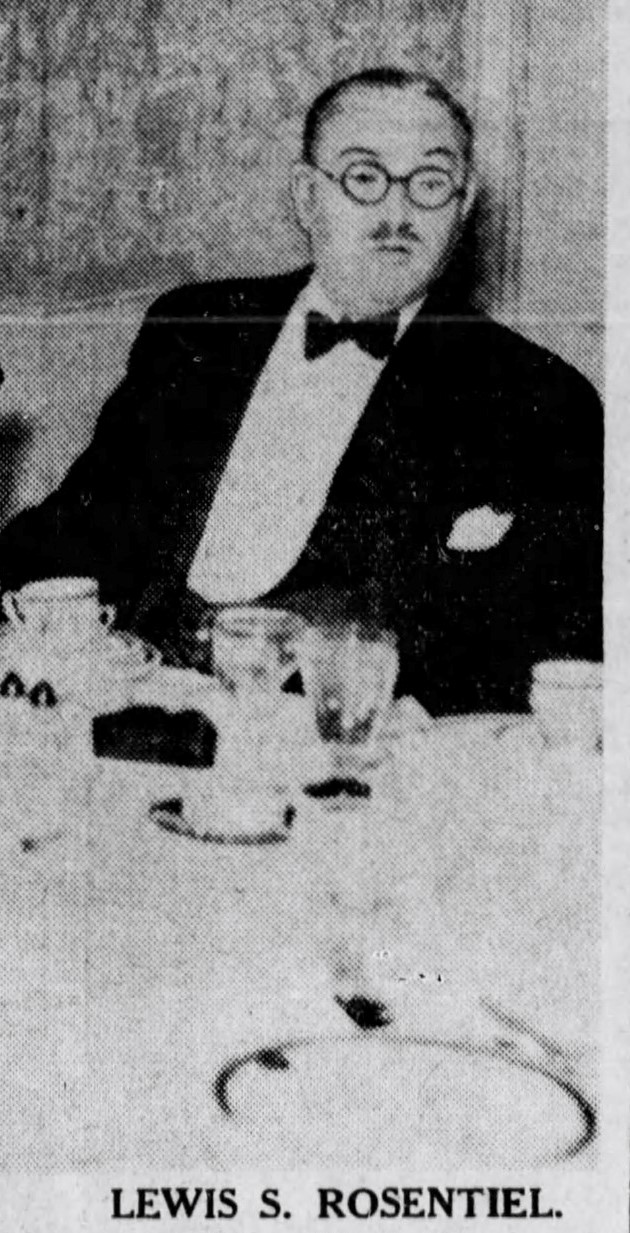
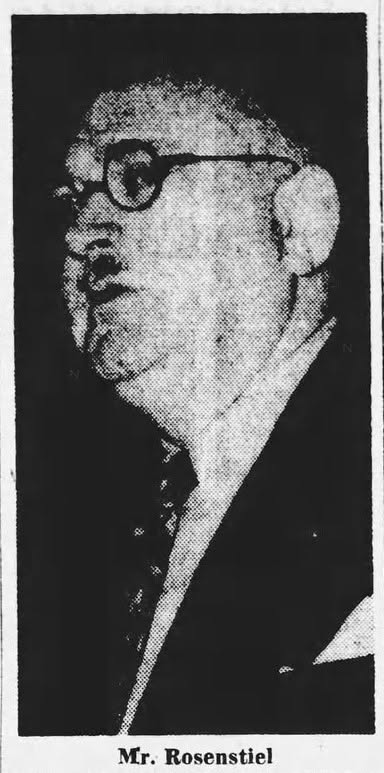
Most whiskey enthusiasts have heard of Schenley. You don’t need to be a whiskey history geek to be familiar with the company. If I were to ask, “Who the president of Schenley after Prohibition?” most whiskey geeks could answer that question. Lew Rosenstiel…right? Only…he wasn’t. Rosenstiel wasn’t president of Schenley until 1948- 15 years AFTER Repeal! Before 1948, Rosenstiel’s role at Schenley was as chairman of the board. He had been a founder of the Schenley Products Company when it was incorporated in 1920, but he was not alone in forming that company. Besides being a very capable businessman, Lew Rosenstiel was very lucky in his family and friends. He just happened to be in the right place, at the right time, with the right people- in Cincinnati. But if Rosenstiel wasn’t president of Schenley, who was? And how did the company become the behemoth we know it to have been? Oddly enough, there’s very little information out there on this topic. I’m going to try to spend the next few days filling in some rabbit holes!
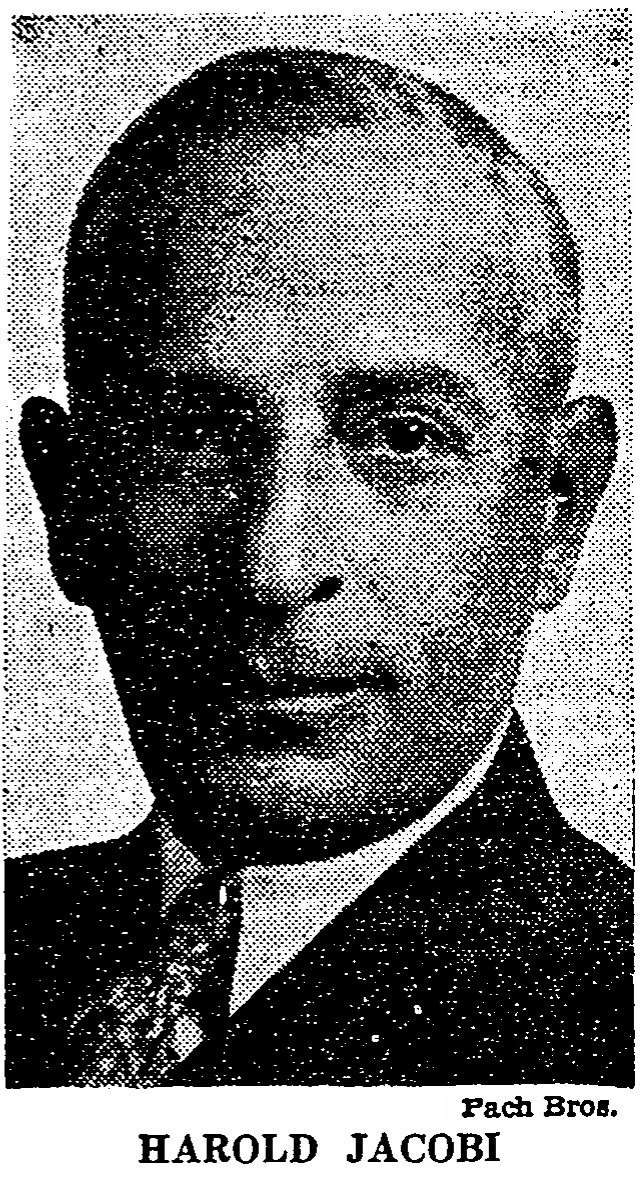
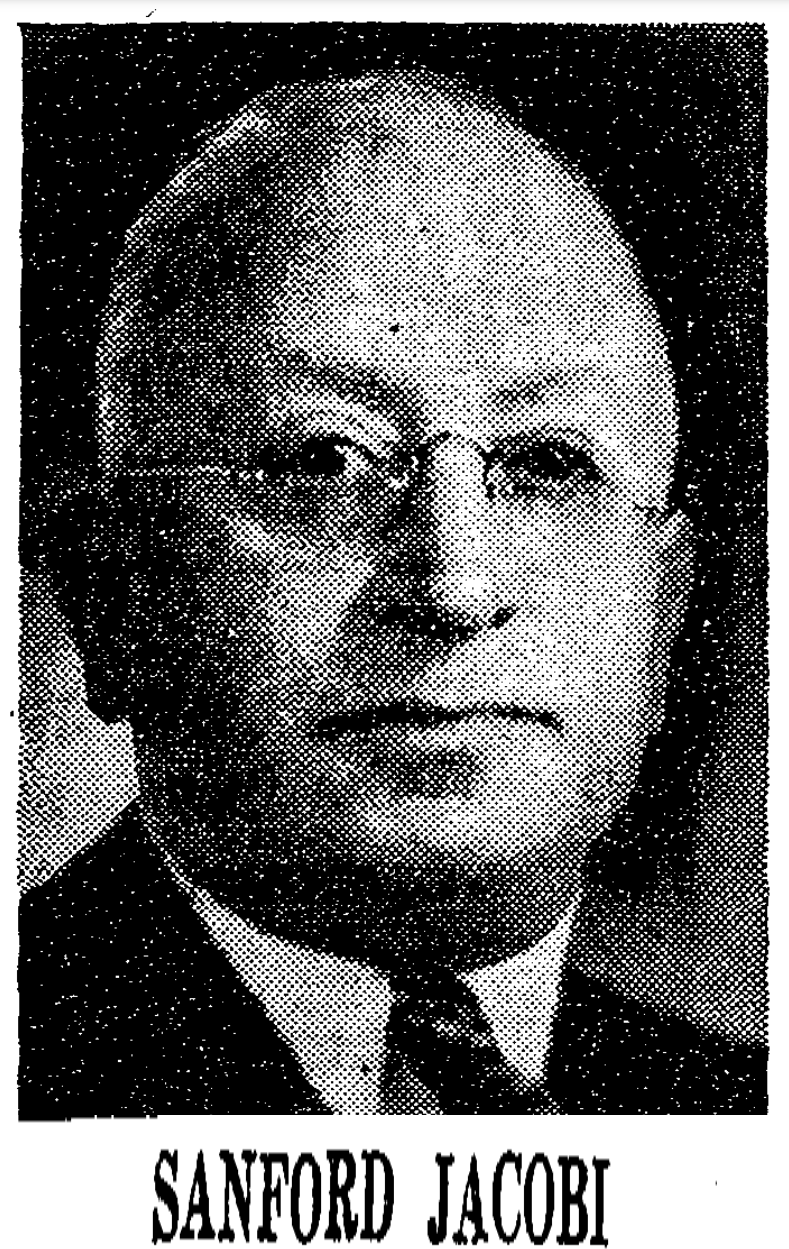
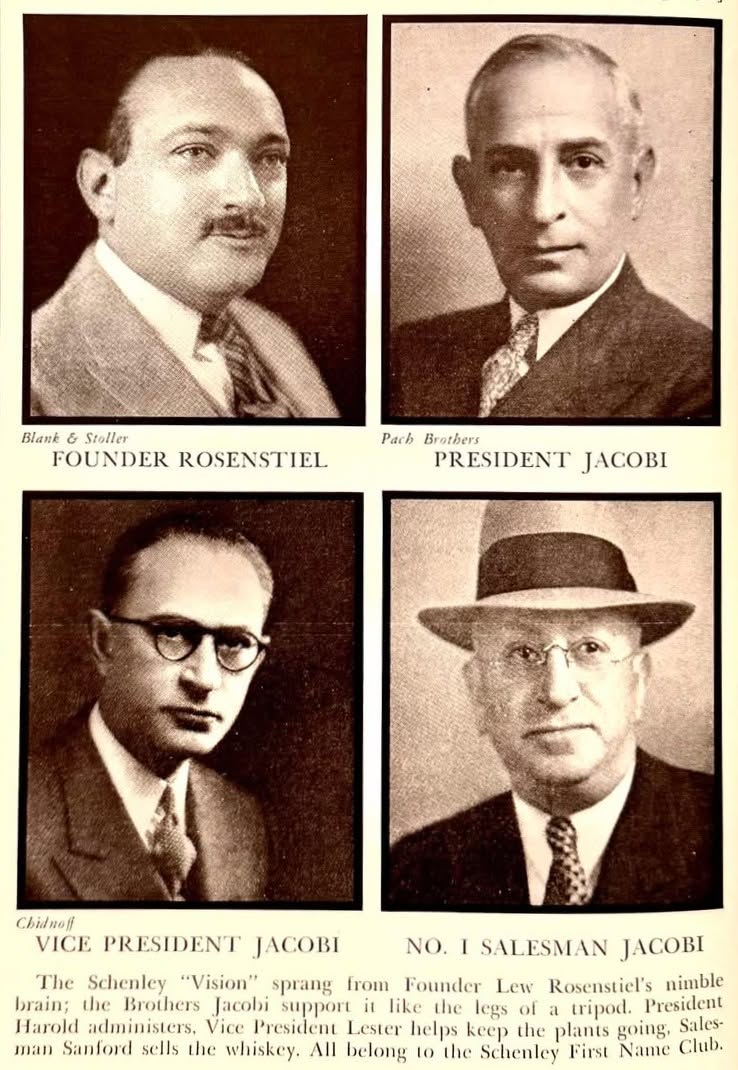
I’ve written about Schenley before (https://www.dramdevotees.com/the-history-of-schenley/), and I’ve researched Mr. Rosenstiel at length- always giving him credit for the company’s huge successes after Repeal in 1933. But the truth is, he wasn’t the sole founder of Schenley, and he wasn’t the guy making all the big decisions. While Lew Rosenstiel WAS appointed chairman of the board for Schenley, the company’s leadership roles (president, vice president, treasurer) rested with the Jacobi brothers- Sanford, Harold, and Lester E. Jacobi- Lester, arguably being the most important of the three as far as American whiskey history goes. There is VERY little information about these men available anywhere- no whiskey books or whiskey histories even mention them, at least not at any length. YET, they were intimately involved in the creation of the Schenley empire, the country’s second largest spirits company after Repeal! (National Distillers being the largest.)
After doing some deep dives into the Jacobi brothers and their incredible histories, I’ve come away wondering why Lewis Rosenstiel has always overshadowed these equally important, if not MORE important historic figures in American whiskey history. The only answer I can give is that Schenley ceases to be relevant in modern times. Schenley was sold in 1987- almost 4 decades ago- and exists only as an historic footnote for famous modern brands. Most whiskey history is brand-based and, understandably, not many people have cared to know more about the weird transitions in the industry that took place during and after Prohibition. But for me, a person very focused on the history of rye whiskey in the United States (and a person that wants to know how and why things are the way they are), I find the omission of the Jacobi Brothers troubling. Not because they were rye whiskey guys (they weren’t), but because their own history within the liquor industry dovetails with so many other important characters that helped to shape the industry as we know it today. Lester E. Jacobi, who passed away in 1969 at the age of 83, founded and managed the Old Quaker Distillery in Lawrenceburg, Indiana. The men that Lester Jacobi hired to make rye whiskey for Schenley after Prohibition and the many distilleries he and his brothers fostered after Repeal ultimately shaped the way rye whiskey is made today. That being said, I’d like to spend some time looking at several things over the next few days-
1. How did Lew Rosenstiel come to be a founding member of Schenley?
2. How did Cincinnati’s James Levy & Bro. change American whiskey history?
3. How did Cincinnati affect Kentucky’s dominance over American whiskey?
This deep dive has been ongoing, so there may be more as my research unfolds. Let’s answer the first question here. The following blog posts will cover questions 2 & 3.
Part 2-How did Lew Rosenstiel come to be a founding member of Schenley?
Let’s begin by saying that Lewis Solon Rosenstiel was a native Cincinnatian born to wealthy, well-known parents. He was born in 1891, so by the time Schenley Products Company was incorporated in 1920, Rosenstiel was 29 years old with a great deal of experience already under his belt. Cincinnati had been a thriving city before Prohibition, full of wealth, prosperity, and opportunity. Lewis Rosenstiel’s father, Solon M. Rosenstiel, was an influential cotton goods manufacturing agent within Cincinnati’s clothing industry. Solon married Eliza Johnson, sister to David I. Johnson. David and Eliza Johnson were celebrated Cincinnatians, having been the grandchildren of David Israel Johnson, a pioneer settler of the city. It’s important to note that both Lew Rosenstiel’s father AND his mother (through her brother) laid the path for him to follow toward success. His mother, Eliza Johnson, was Cincinnati royalty. Her grandfather was the famous David Israel, one of the first 5 Jewish men to ever settle his family in Cincinnati.
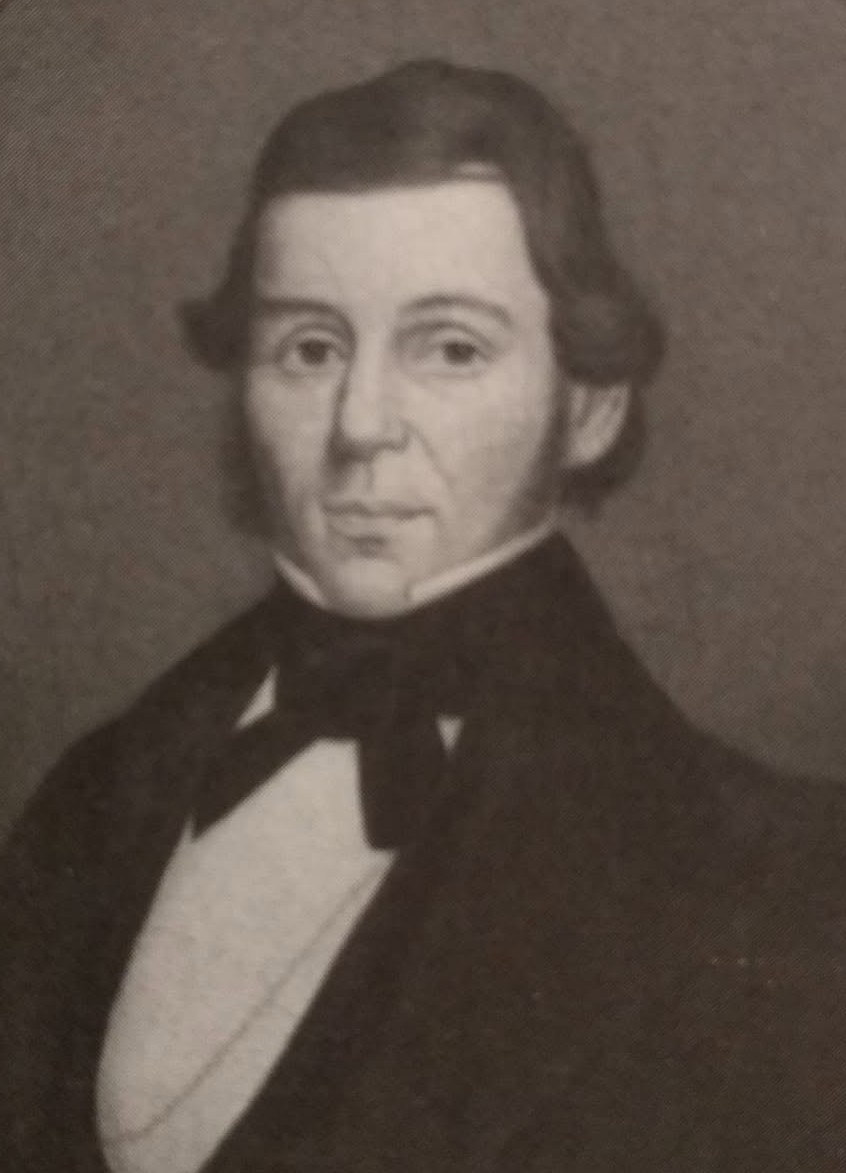
David Israel Johnson portrait
David Israel (1795-1842) immigrated to the US in 1818 to join his brother in the fur trade (Indiana territory). He took the name Johnson after coming to America, just as his brother had done. David’s children were all rather remarkable, but his third son, Frederick Augustus Johnson, and daughter, Selena Abraham, were said to be the first Jewish boy and girl born in Cincinnati! Some claims go as far to say they were the first in all of Ohio or even the first west of the Alleghenies! Frederick Augustus’ younger brother, David I. Johnson (1834-1893), left Cincinnati to become a distiller in New York City. Another of Frederick’s younger brothers, Samuel J. Johnson, became a famous, well-liked auctioneer in Cincinnati. (His auction house at 20 South Fourth Street was demolished the day before he died.) Samuel J. was father to Lewis Rosenstiel’s uncle, also named David I. Johnson (1859-1919). Suffice it to say, the name David Israel Johnson remained a popular one in the family, but Lew Rosenstiel’s uncle followed in his OWN Uncle David’s distilling footsteps. David I. Johnson, instead of moving to New York as his uncle had done, became a liquor dealer back in Cincinnati, his family’s home. David joined many other entrepreneurial liquor men in Cincinnati in the late 1800s buying whiskeys from some of the finest distilleries in the country and selling them under their own labels as a rectifier. David I. Johnson worked closely with another famous Cincinnatian, Harry M. Levy. David Johnson’s success in the liquor industry, and therefore Lewis Rosenstiel’s success in the liquor industry, began with the Levy brothers. (I’ll get into who the Levy Brothers were and just how influential they were for Cincinnati’s liquor trade tomorrow.) It was David I. Johnson’s association with James Levy & Bro. in Cincinnati that enabled him to take on a leadership role within Cincinnati’s liquor industry.
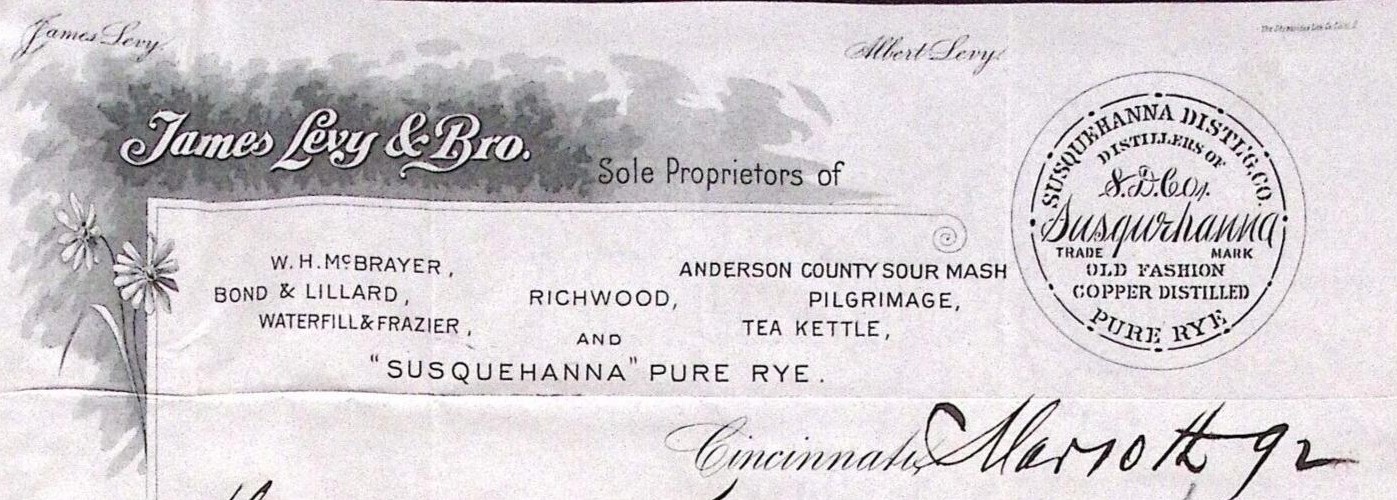
James Levy & Sons letterhead, 1892.
When James Levy and George W. Harris retired ownership of their 50-year-old company in 1907, the torch was passed to Harry M. Levy (Albert Levy’s son) and his business associates. George W. Harris, the who had begun as an errand boy for the company in its early years, was the last remaining senior member of the firm and he was retiring. Harris’ business partners (Harry M. Levy, David I. Johnson, and William H. Harding- joined by Morris S. Westheimer, who had left Ferdinand Westheimer & Co. to join the group) would carry the business into the future. James Levy & Bro., one of the largest and most influential liquor firms in the country for over half a century, was incorporated by its successors as the Susquemac Distilling Company. David I. Johnson became the company’s vice president. It was this leadership role within this powerful, Cincinnati-based liquor firm that allowed Johnson to eventually take his nephew under his wing. Lew Rosenstiel was only 16 years old when the Susquemac Distilling Co. was formed, but the year 1907 turned out to be a life-altering one for the young man nonetheless.
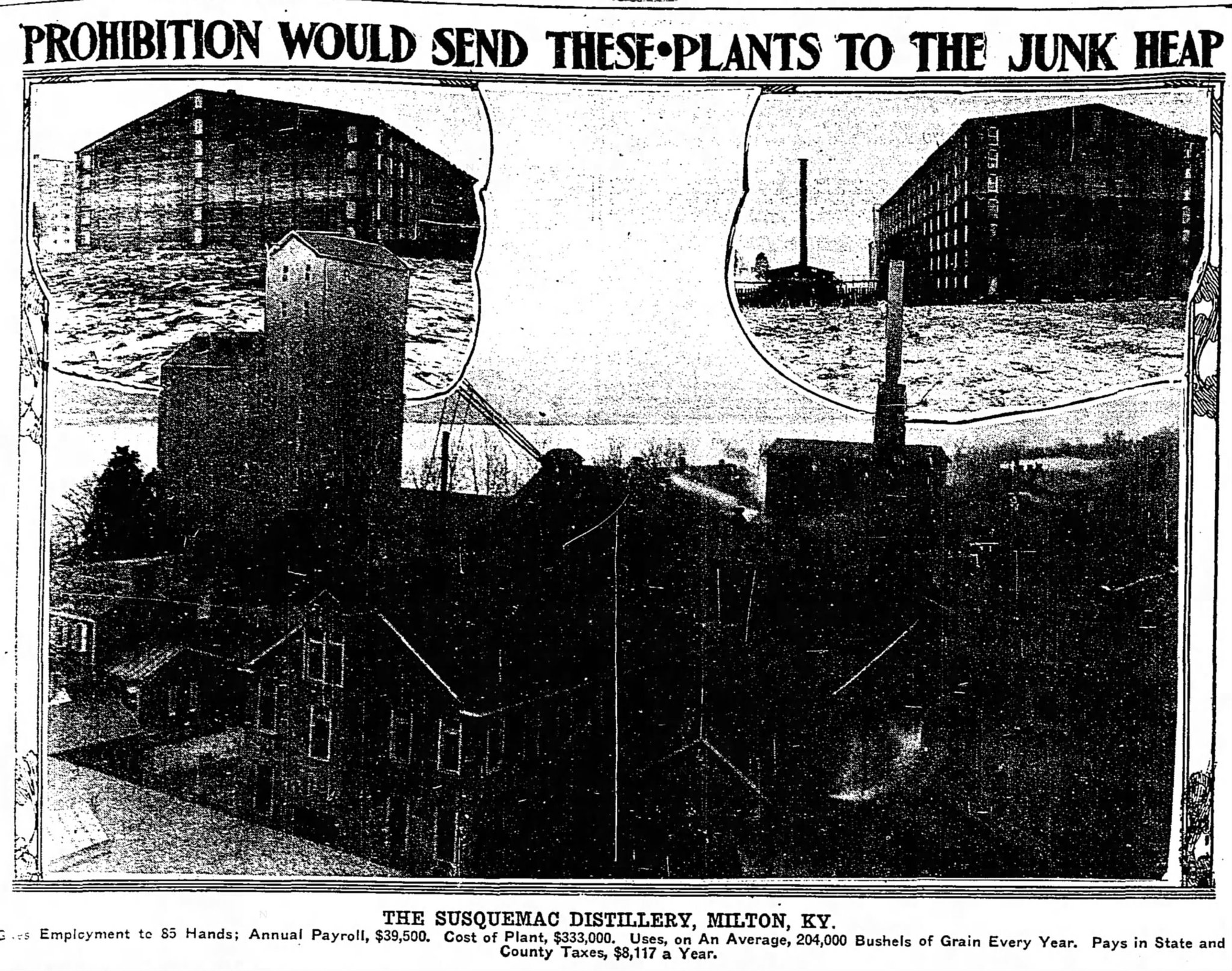
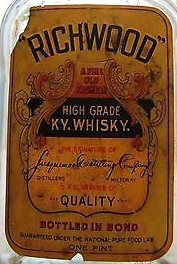
While playing high school football at Cincinnati High School, Lewis Rosenstiel took a cleat to the head and sustained a serious eye injury. The doctor ordered him to quit the team and cease reading. His mother sent young Lew to her brother’s house in the country to convalesce. After about a year of recuperation, Rosenstiel’s Uncle David put him to work in the company’s distillery in Milton, Kentucky, moving grain in the meal-room. And can you guess what he was moving? Rye! Though the Susquemac Distillery (Tea Kettle/Richwood Distillery) was in Kentucky, its core product was rye whiskey, and it was among the largest plants in the state focused on rye production.
(a little history on Susquenac/Richwood Distillery, just because)
The Susquenac Distillery in Milton, KY was originally known as the Richwood Distillery. It was founded in 1840 by James Snyder. The official name was The Snyder Distillery Company until 1879 when the distillery burned down. When it was rebuilt in 1880, the name was supposedly changed to Susquemac Distillery Company. This is unclear though. I haven’t looked that far into it, but I do know that David Johnson had been a partner of the James Levy & Bros. Company, a 50-year-old Cincinnati-based firm, until 1907 when the Susquenac Distilling Company was incorporated with a capital of $750,000. (The president of the company, Morris F. Westheimer, was also chairman of the executive committee of the National Distillers Association of America in 1915.) The buyout took place right around the time that Lew Rosenstiel began to work for his uncle. You can see in old ads that the Susquenac Distilling Company was in Cincinnati, but that address was for their home offices and very likely their main hub for distribution for the famous Susquehanna Rye Whiskey. Their bottling plant was in Cincinnati’s Traction Building. The company sold off its shares in 1919 and the brands would become the property of the American Medicinal Spirits Company. Many may recognize the Susquehanna Rye Whiskey brand name because the AMSC sold it (using the same labels) as medicinal whiskey.
David Johnson and his partners had spent 1907 and 1908 upgrading and enlarging the Richwood/Susquenac plant, so Lew Rosenstiel was likely witnessing construction going on while he worked. Over the next several years, thanks to his uncle, Lew learned a great deal about the whiskey industry from some of the most influential men in Cincinnati’s liquor trade. In fact, one of Rosenstiel’s first business partners was Edmund P. Mundy, secretary under Harry M. Levy. Together, the men formed the Cincinnati Distributing Company in 1917, capitalized at $50,000. The following year, Lew Rosenstiel would re-incorporate the same company with a new partner, only this time, it was capitalized at $150,000 – $300,000. His new partner was Lester E. Jacobi. The merging of ideas and the genesis of a new way of doing business was taking shape. Lew Rosenstiel and Lester E. Jacobi would apply everything they had learned from their own business experiences to advance their vision and enlarge their company.
Cincinnati had always been a hub for liquor distribution, so companies like the Cincinnati Distributing Company were not alone. Another Cincinnati-based company, known as Republic Distributing Company, was led by Daniel K. Weiskopf of the Whiskey Trust. Weiskopf had been scooping up properties with large warehouses full of whiskey, a smart investment to be making with distillery production ceased as of 1917 and the threat of National Prohibition looming. Weiskopf knew Lewis Rosenstiel and Lester Jacobi, not only through the shared business and interactions of their distribution companies, but through Rosenstiel’s uncle and his Susquemac Distilling Company. Weiskopf and David Johnson had served on committees together and overseen production allotment assignments for the distilleries belonging to the Kentucky Distilleries and Warehouse Company (a large subsidiary of the Whiskey Trust/American Spirits Manufacturing Co.) in 1914. When D.I. Johnson died in 1918, his role in the company passed to Lewis Rosenstiel. Rosenstiel, like so many other owners of distilling companies before Prohibition, sold off his shares in his uncle’s Susquemac Distilling Company to the American Spirits Manufacturing Company (ASMC)- very likely directly to D.K. Weiskopf. In 1918, Weiskopf’s Republic Distributing Company acquired the Schenley Distillery in Schenley, Pa. D.K. Weiskopf would eventually partner with Rosenstiel and Jacobi, and on August 23, 1920, they incorporated the “Schenley Products Company” in New Jersey. (Obviously, there’s a lot more to this story! Stay tuned😊)