Let’s pick up where we left off in the last post.
Part 9- The W.P. Squibb Distillery, R.D. #8
About half a century before Kosmus Frederick built what would become the Squibb Distillery, a small distillery was established on the site by Isaac Dunn & Stephen Ludlow. (see Part 3 of previous post)

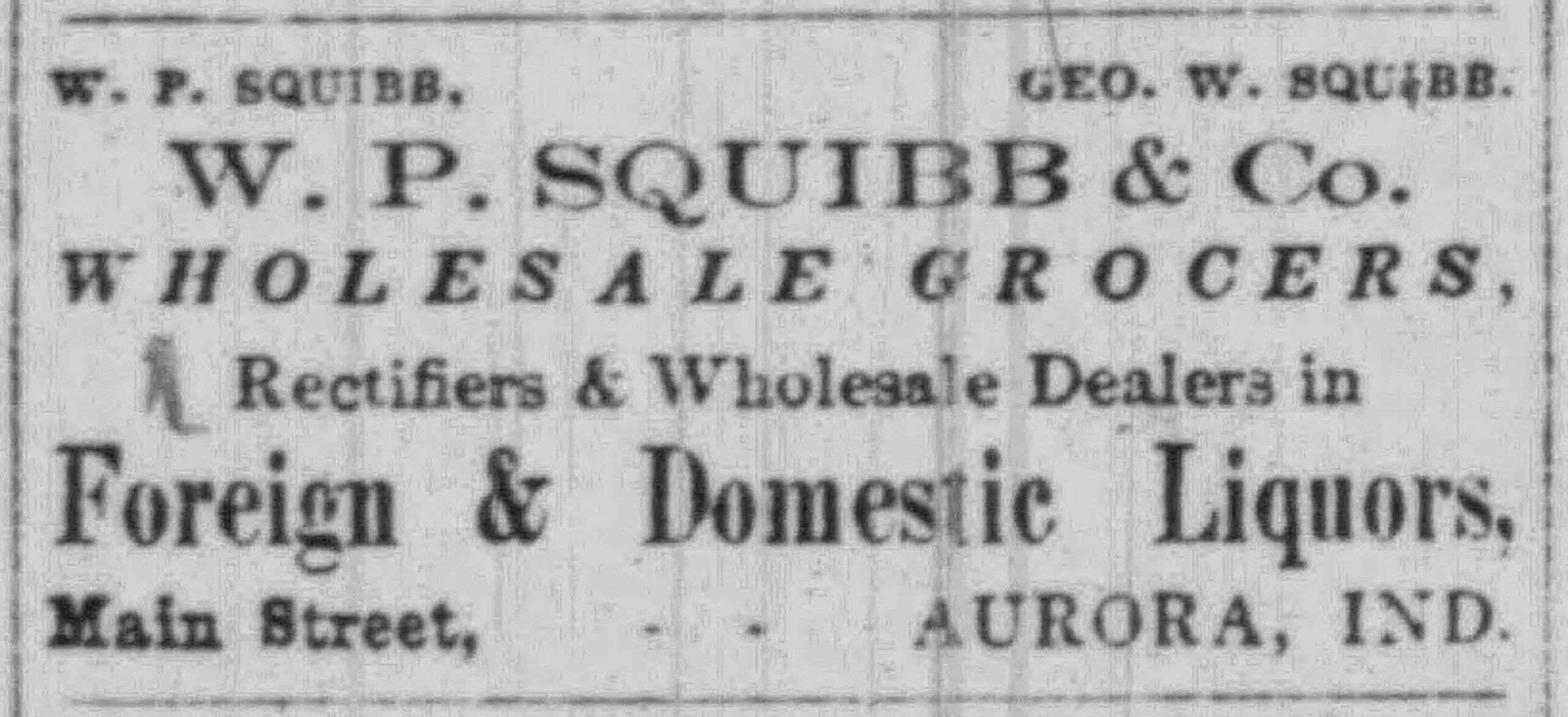 In 1868, just after the Civil War, Kosmus Frederick purchased ground on which to build his distillery. (It would not be his last.) Before completing the build, he partnered with William Pinkney Squibb and George Washington Squibb, liquor men (and brothers) based out of Aurora, Indiana, several miles downriver. In 1871, Frederick sold his interest in the distillery to the two men, though he remained an operator at the plant. Here is how the “History of Dearborn and Ohio Counties”, published in 1885, described the distillery:
“The buildings are built of brick, 20×200 feet in length, with an L extending back forty feet, three stories in height, with a capacity of mashing 330 bushels of grain per day, producing 1,260 proof gallons of spirits. There is a brick warehouse, fire-proof, 40×100 feet, and they have recently erected a brick building for the purpose of continuous distillation, to be used in the manufacture of alcohol, cologne spirits and Bourbon whiskies, with cattle and hog pens sufficient for all the stock. The value of the buildings and real estate is $30,000. This firm gives employment to fifteen persons and pays out annually for labor over $6,000, and for articles to be used in the process of manufacturing $71,000, and pays annually to the General Government for revenue tax over $300,000. The value of the manufactured goods, exclusive of tax, is over $75,000, and the value of the stock fattened on the slop, $40,000. The principal points for the sale of the goods of this firm are Cincinnati, Louisville and St. Louis. The members of the firm are active businessmen, and are known in business circles for their promptness and reliability.”
There are several important points made in the description.
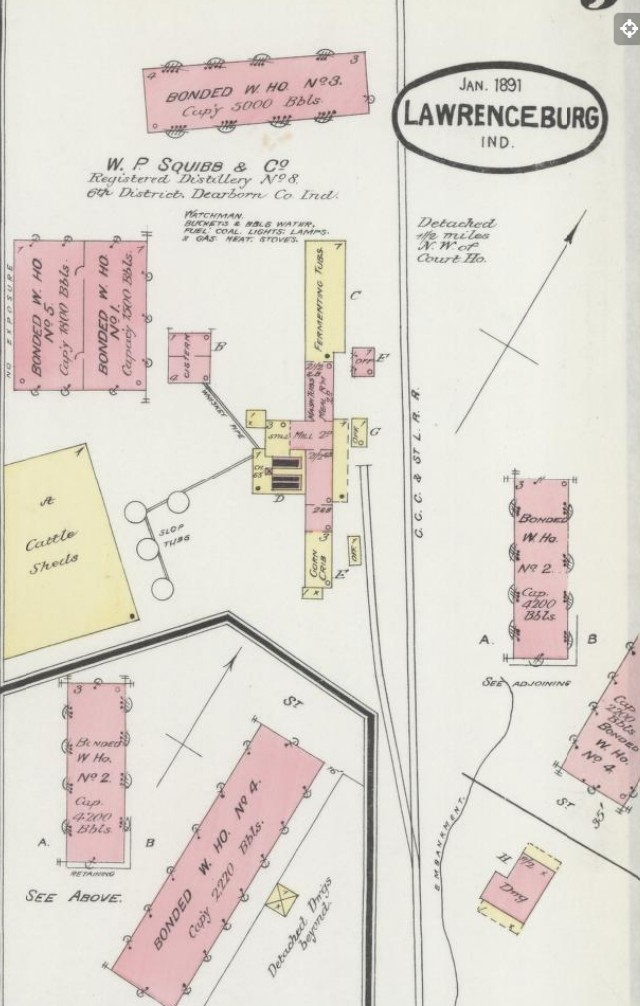
1. The Squibb brothers added a continuous still in 1885 (Kosmus Frederick did not originally install one) that was employed in the manufacture of bourbon and high wines for the rectification trade. What the description does not say is that the distillate from the column still was condensed by means of a worm tub! You can see the worm tub outside of the still house in the 1885 Sanborn map of the Squibb Distillery below.

2. The distillery was selling its whiskeys to firms in Cincinnati, Louisville and St. Louis, all of which were easily accessible from Lawrenceburg by river. The Ohio River made Lawrenceburg and its neighbor, Cincinnati, a hub for industry and distilled spirits distribution in the late 1800s. In fact, the “History of Dearborn County”, published in 1915, explained: “It is claimed that for the town that it is, in proportion to its population, the wealthiest corporation in the country.” That WAS saying something!
William and George had been engaged in the grocery and liquor business in Aurora before moving to Lawrenceburg in 1869. After their business relationship with Kosmus Frederick was dissolved in 1870, the Squibb brothers continued to enlarge and improve the plant over the next several decades. I’ve included several Sanborn maps below that illustrate the growth of the plant over the years.


In 1905, William P. Squibb brought his sons, Robert, George, Nathaniel and Horace in as partners. George’s son, Thomas, and their sister’s son, Louis Hogarth Foulk, were brought into the company, as well. Louis H. Foulk was the son of Alta Melvilla Squibb, the middle child- born between William and George. She was married to Louis Moses Foulk, who had been a bookkeeper for the Squibb’s grocery concern. L.M. Foulk passed away in 1889, so Alta was key in helping her sons follow in their father’s footsteps. Both her sons, George and Louis Foulk, worked as bookkeepers for her brothers’ company.
When George Squibb died in February 1913 at the age of 75, the W.P. Squibb and Company was incorporated with the next generation of Squibbs at its helm. William Pinkney Squibb died later that year at the age of 83, just 8 months after his brother, in October 1913. Though the Squibb Distillery had lost its founders, the next generation was prepared to continue their fathers’ legacy. They could not have anticipated how limited the future of their new corporation would be.
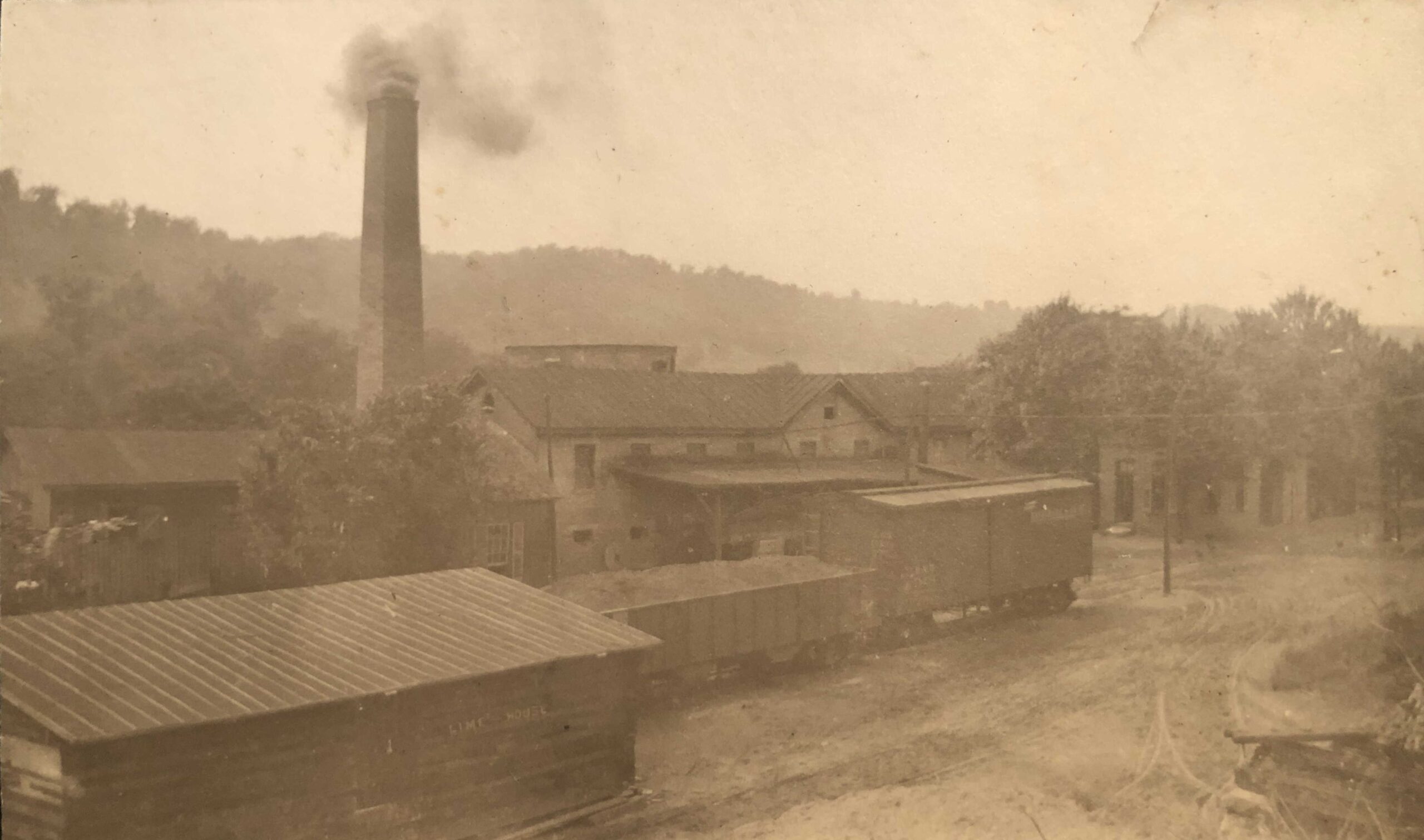
Nathaniel E. Squibb, while not W.P. Squibb’s eldest son, took the lead of his father’s company. He married Elizabeth Hunter Carter, daughter of Richard D. Carter, in 1901. Richard Carter had been a distiller and yeast maker in Wheeling, West Virginia until his death in 1885. Horace Squibb became superintendent of the distillery’s cattle department. Nathaniel’s brother-in-law, Julius Pollack Carter (Florence Squibb’s husband), became vice president of the Greendale Distilling Company (Nicholas Oester Distillery) in 1914. All seemed to be moving along for the Squibb family until February 1917, when Indiana’s Senate passed the Wright Prohibition Bill outlawing the manufacture and sale of alcohol within the state. By April 1917, Lawrenceburg’s distilleries were shuttered. The Squibbs would have to rethink their business strategy.
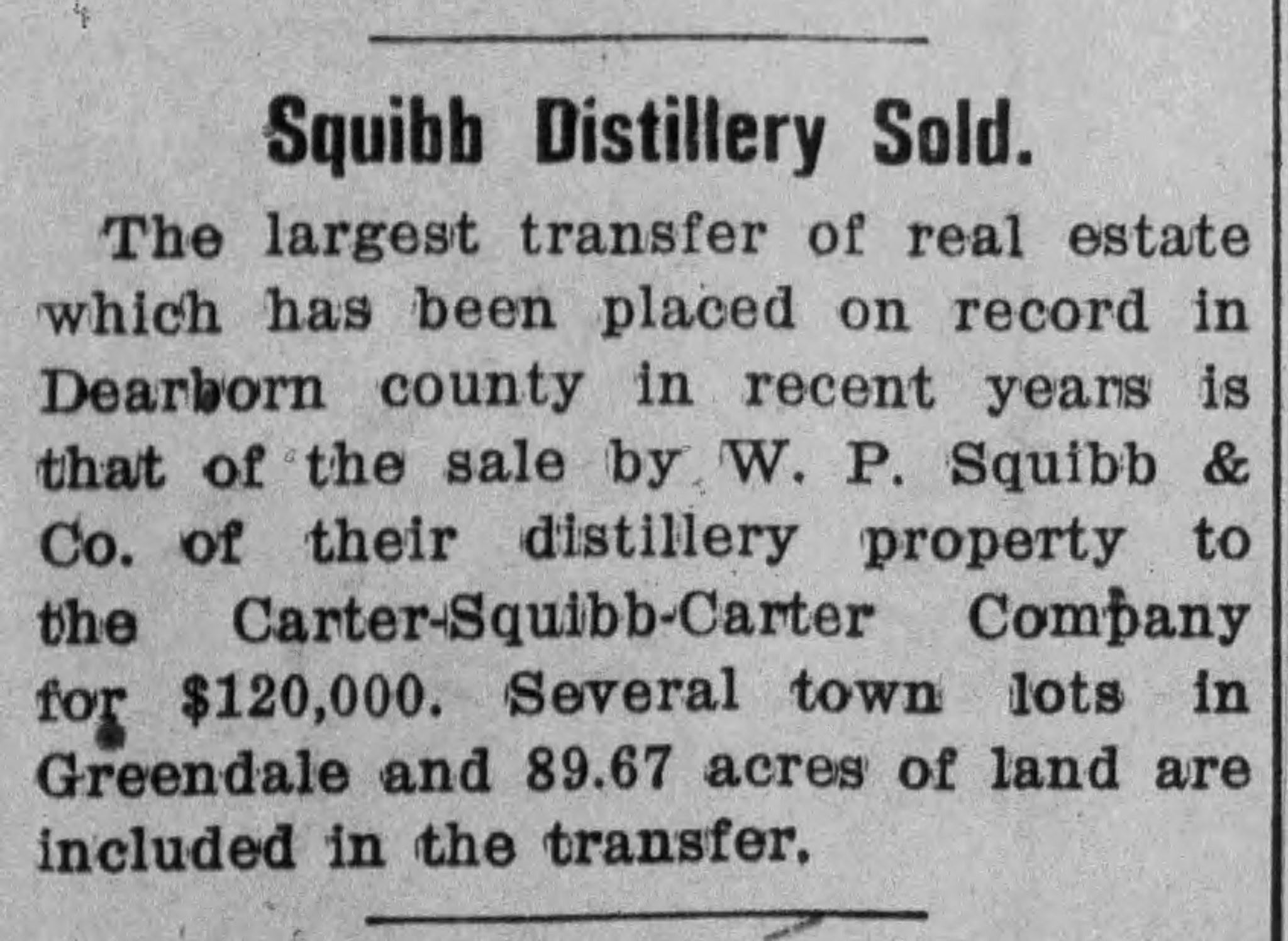
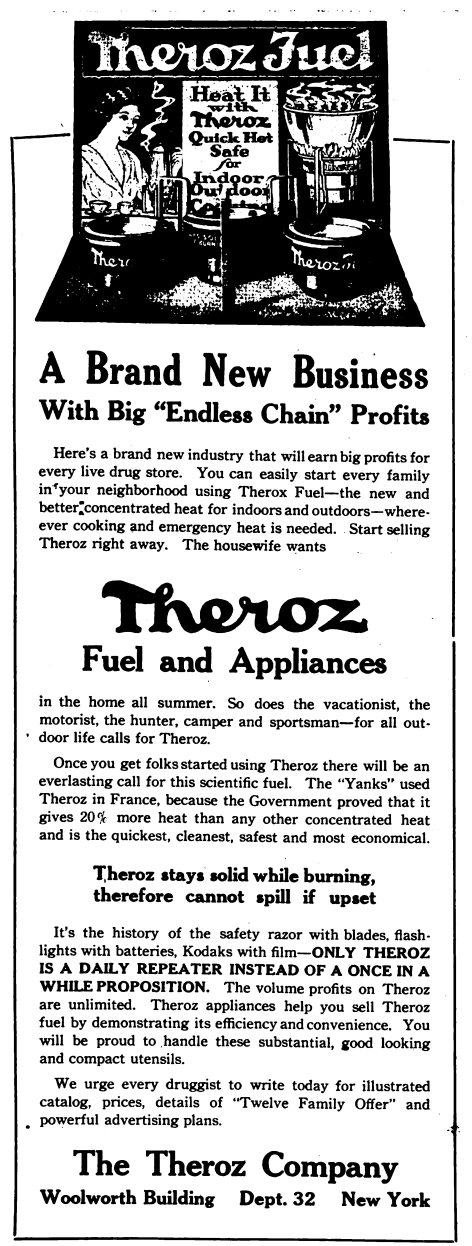
In August 1917, Robert L. Squibb, Julius P. Carter, and Nathaniel E. Squibb formed the Squibb-Carter-Squibb Company in Greendale on $50,000 capital with the intent to “manufacture alcohol, chemicals, and other articles incident therto.” In December, Nathaniel E. Squibb embraced an entirely different business. He partnered with Holman G. Steinmetz and Elmer L. Schneider to create the Greendale Tailoring company, a clothing company. The Squibb-Carter-Squibb branched into several companies over the next few years. In October 1918, the brothers-in-law formed the Basic Products Company, which they operated out of one the warehouses of the Squibb Distillery. Their revolutionary product was called Theroz, a canned fuel (essentially what we associate today with Sterno) which was intended for use by the military during the war (mess kits), but was also advertised as a safe, portable fuel source for the home. Squibb-Carter-Squibb also merged with Eikenberry-Fitzgerald Company of Cincinnati to form the Nutritia Company in 1919. 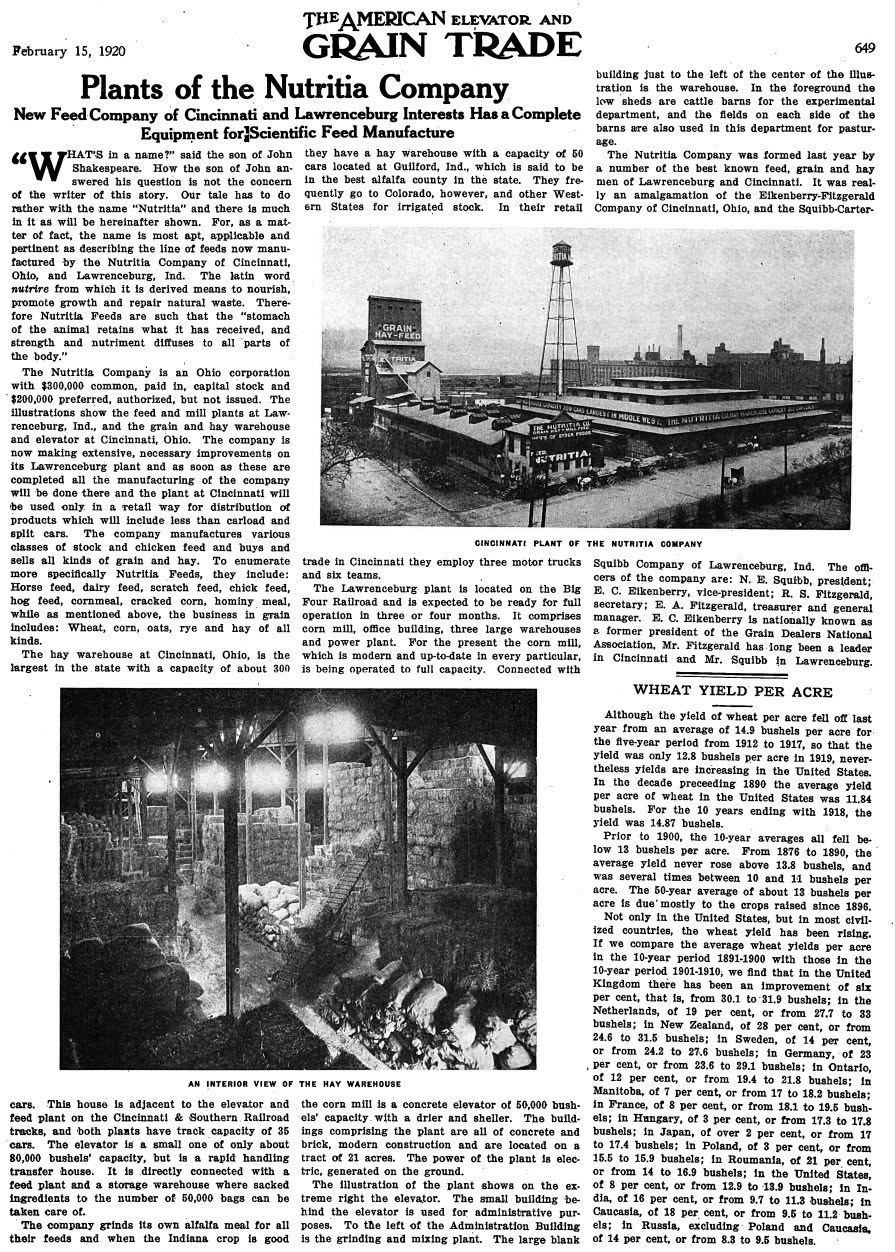
The Nutritia company took advantage of the grain elevators and storage at the Squibb Distillery by selling hay and animal feed. (The Eikenberry-Fitzgerald Co. would later become the Hawthorne Milling Company, which is the name you see on the 1922 Sanborn map of the Squibb Distillery.) The following year, other forces in Cincinnati would be taking advantage of the whiskey still stored on the premises.

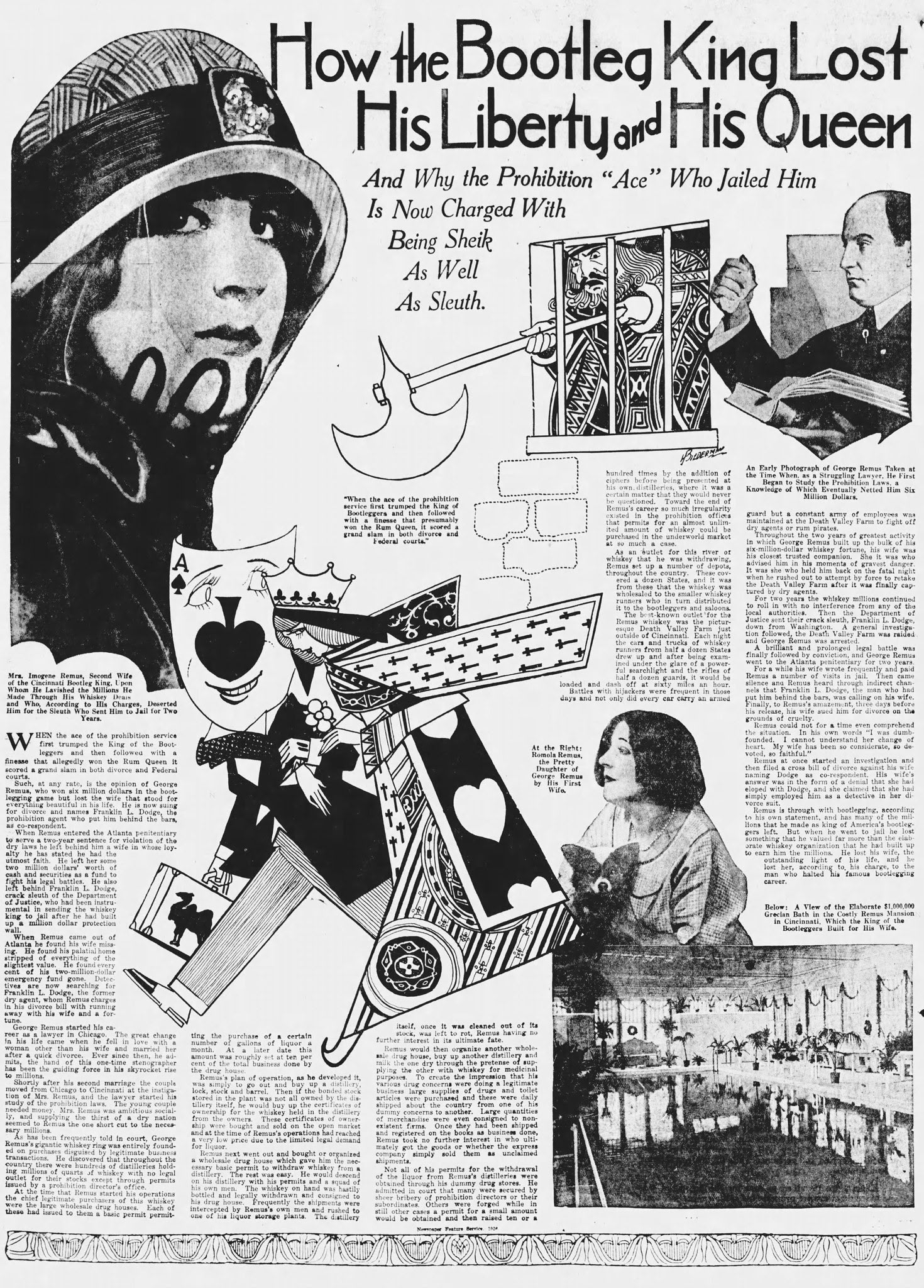
In early October 1921, George Remus was caught violating the Volstead Act by illegally withdrawing liquor from the Squibb Distillery’s warehouses. A great deal of whiskey had been purchased from both the Squibb and Greendale Distilleries by the Co-operative Drug and Supply Company of Cincinnati, Ohio. The company was supposedly owned by “A. Brown”, but no such person existed. The purchases were traced back to the Kentucky Drug Company, whose permit to sell medicinal whiskey had been revoked. It was quite the scandal, and the Squibb family was never implicated in the sale of any whiskey to Remus…however, it is unclear how or when the distillery changed hands or who was involved in the sale of the whiskey to begin with!

By 1925, Indiana doubled down on its Prohibition laws by passing the Wright “Bone-Dry” law. This law eliminated ALL liquor production in the state and made it illegal to possess any alcohol, including medicinal alcohol! The following year, the Squibb Distillery and all the companies on the property (Hawthorne Milling Co, Nutritia Co., and the Transit Milling Co.) were purchased by John A. Shields. Shields organized a new company known as Greendale Mills, Inc. His feed company began well, but soon faced several lawsuits over the quality of grain being sold in the late 1920s. The Squibb family’s Theroz company was dissolved in 1929 after legal battles with the Sterno Company (United States Industrial Chemical Co.) over its patent. The plant fell idle and was used as a lumber storage facility for a time before being sold to Lester Jacobi and Schenley in July 1933. The Schenley Distilling Company established their new company, Old Quaker Distillery, on the site.

Part 10- The Rossville Distillery, RD #7 – The Early Years
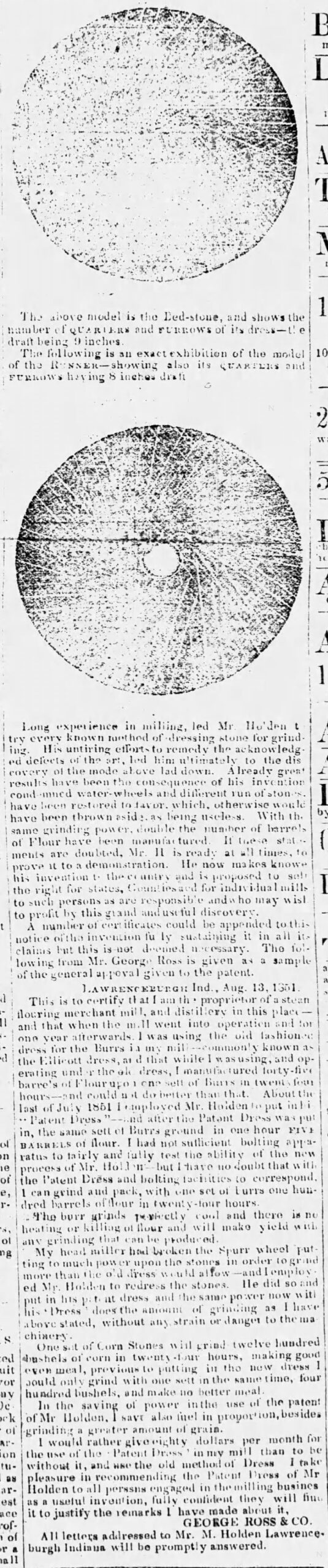
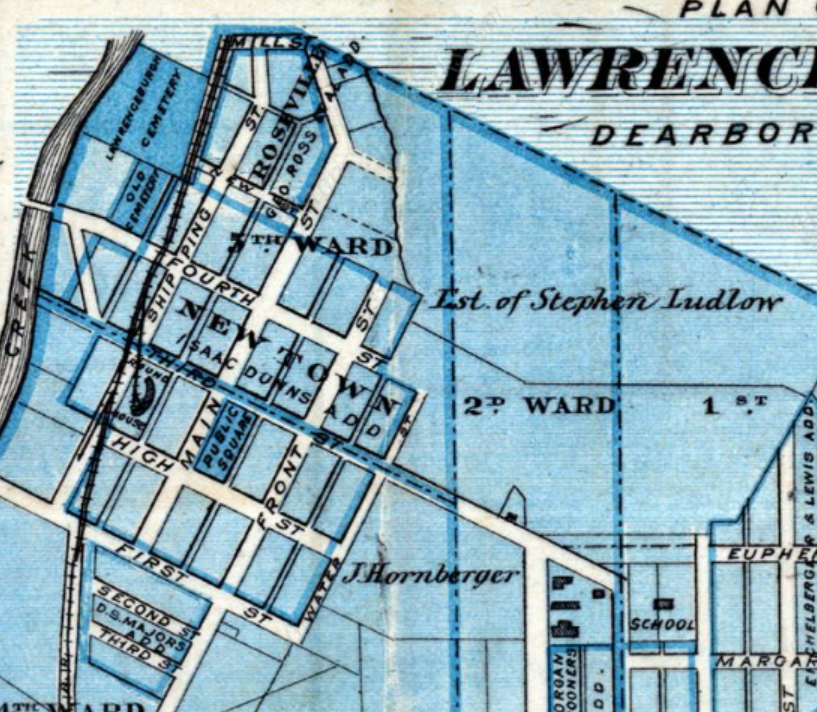
The history of this distillery in Lawrenceburg, Indiana usually begins with George Ross. Ross was a miller and distiller that carved out a piece of Lawrenceburg along Tanner’s Creek, which he named Rossville. (see 1876 map of Lawrenceburg) George Ross founded the Rossville Distillery in 1847 with partners Gideon Renner and Antony Schwarz. Both Gideon and Antony were distillers- both were listed “Distiller” and as born in Baden, Germany in the 1850 US census. Antony was George’s brother-in-law, husband to Mary Ross, whom he married in 1839. It’s important to note that George Ross was more than just a distillery owner. He started a brewery in 1845 in Lawrenceburg’s Old Cotton Mill building, which had been east of Front Street, between 3rd and 4th streets. (The brewery was converted to Lawrenceburg’s Wheel Company in the 1880s. Today, there is a CVS on the site!) He also operated a steam-powered grist mill, in which he manufactured both flour (to sell) and grist for mashing in his distillery. An ad placed in Lawrenceburg’s “Independent Press” in 1851 describes the dressings on the burr stones in his mill. While many references describe George Ross as a rye whiskey distiller, that seems very unlikely. He describes the large amount of corn he was milling for mashing purposes in the ad, making it more likely that he was making bourbon and high wines for the rectification trade (just like everyone else did after him in Lawrenceburg).

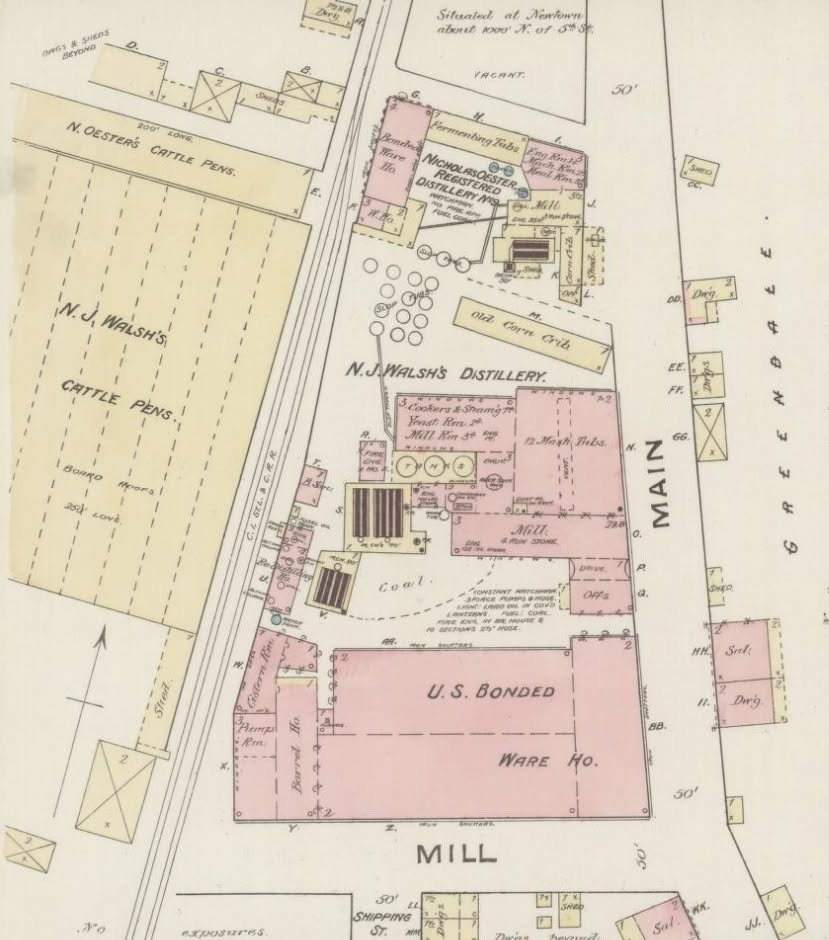
George Ross fell ill in 1853 and placed his distillery up for sale. He died in November of the same year. The plant was purchased by Rittenhouse & Shroyer (local millers) but was not retained by the new owners for long. It was sold soon after to E.G. Hayes and William Probasco. The decade after the Civil War saw several men from Cincinnati operate the plant (E.B. Bradford, Smith N. Fowler, J.S. Smith, and Alf Phillips), but the distillery finally found a committed owner in 1876 when it was purchased by Nicholas J. Walsh of James Walsh & Company. The Walsh concern was based in Cincinnati and owned several plants in Kentucky, but they were beginning to invest in Lawrenceburg, as well. They saw what others were beginning to see- that Lawrenceburg was ripe for growth in the liquor trade. “The History of Dearborn and Ohio Counties” (1885) describes what Walsh & Co. seemed to already understand about the Rossville Distillery: “Since that date (of its construction) there have been several erected which will appear in their regular order; and there is no interest that has done more to build up the trade of the city and county than this one.” N.J. Walsh completely rebuilt and refit the distillery with modern equipment and appliances. In 1885, the plant had “a capacity of mashing 2,100 bushels of grain per day. The feeding pens for cattle (accommodated) 1,500 head, and the warerooms (had) a capacity of storing 25,000 barrels of liquor.”
The End. Final Thoughts on the Lawrenceburg’s Present Distillery, Ross & Squibb.
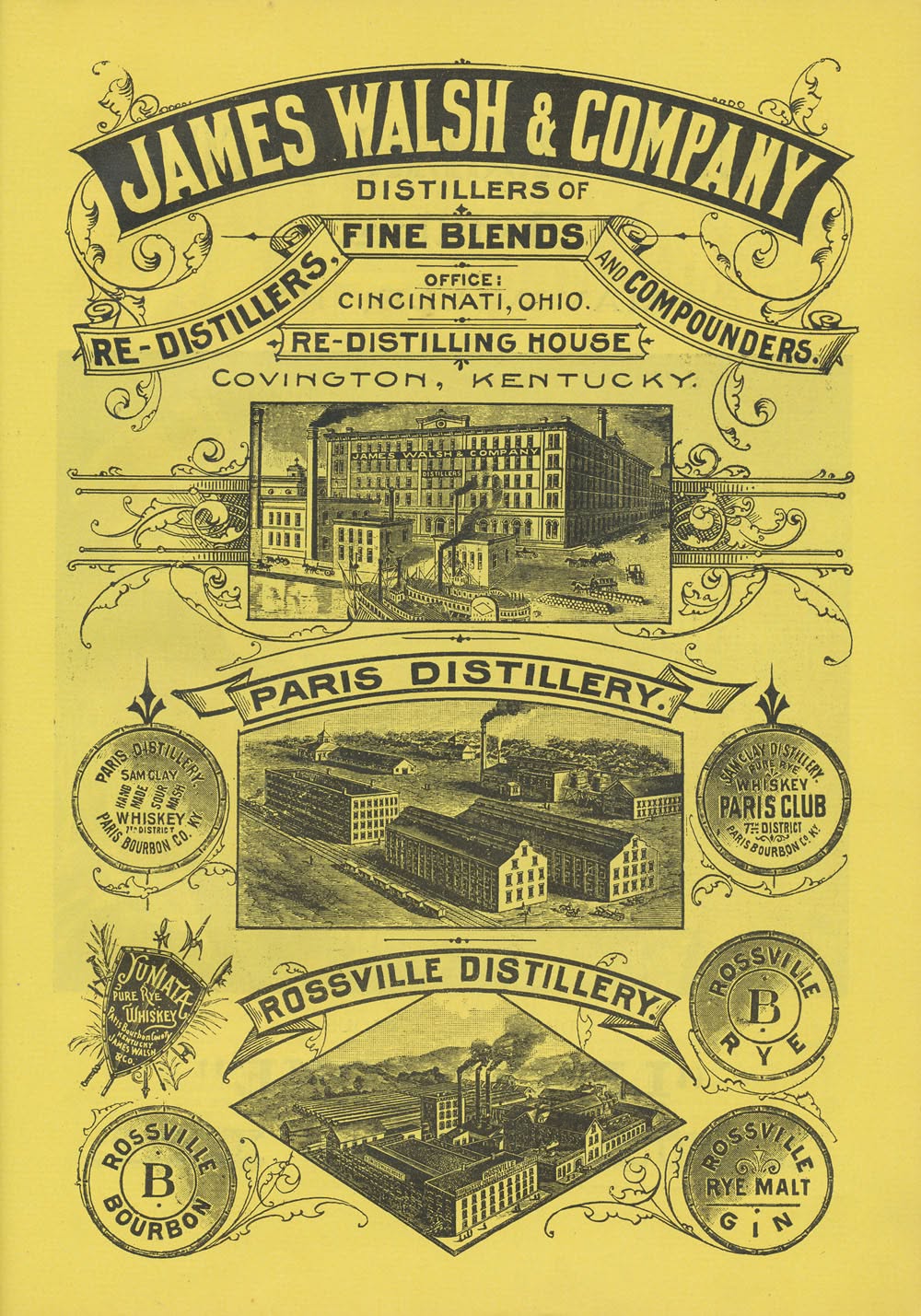
I have a hard time understanding why Ross & Squibb named their most valuable brand after someone as horrible as George Remus. If they were looking for a core brand name, why not James Walsh or any of the multitudes of brands that his company bottled? The history of the Walsh family and their connection to the Rossville Distillery is arguably more interesting, more local to Lawrenceburg, and so much more relevant to the distillery site. James Walsh owned the Rossville Distillery property for 43 years, from 1876 to 1919. Seagram’s owned the Rossville site from 1933 to 2001, 25 years longer than Walsh, but that doesn’t diminish the importance of the property’s pre-Prohibition tenant. The Walsh Company was responsible for turning the Rossville Distillery into a large-scale production facility. James Walsh, his sons, and the O’Shaughnessy family made that distillery a force to be reckoned with before Prohibition. They made Lawrenceburg the envy of the distilling industry and inspired other Cincinnati men like Lew Rosenstiel and Lester Jacobi of Schenley Distilling Company to put the bulk of their investment dollars into Indiana instead of Kentucky or Pennsylvania in 1933. Remus, on the other hand, was a criminal and a murderer. He stole whiskey from the Squibb Distillery’s warehouses, but he had nothing to do with the Rossville Distillery or the production of whiskey. If anything, he tainted and diluted the whiskey before selling it on the black market.

I don’t mean to pick on the Ross & Squibb Distillery. Americans love to love criminals, I suppose. But whiskey enthusiasts also love brand histories and discovering new things about their favorite distilleries. I hope one day to see more brands remembering their distillers- the men that made the whiskey! Rossville Union might recognize William Eberhart, for instance- the last head distiller at Walsh’s Rossville Distillery before Prohibition and Seagram’s head distiller after Repeal until he retired in 1936. Or Paul Schindler who worked with Eberhart. Even a George Ross whiskey would have been a great nod to the long history of Indiana’s “Whiskey City.” What can I say? I’m biased toward the history of whiskey makers, not toward the history of whiskey thieves.