
It is always interesting to read about the heavy influence that whiskey has had on politics throughout history. Whether it was the forces of temperance or the owners of distilleries, Washington D.C. always paid attention where excise taxes were concerned. The tail, it seems, was always wagging the dog. Meanwhile, the American voter was left wondering what to make of it all.
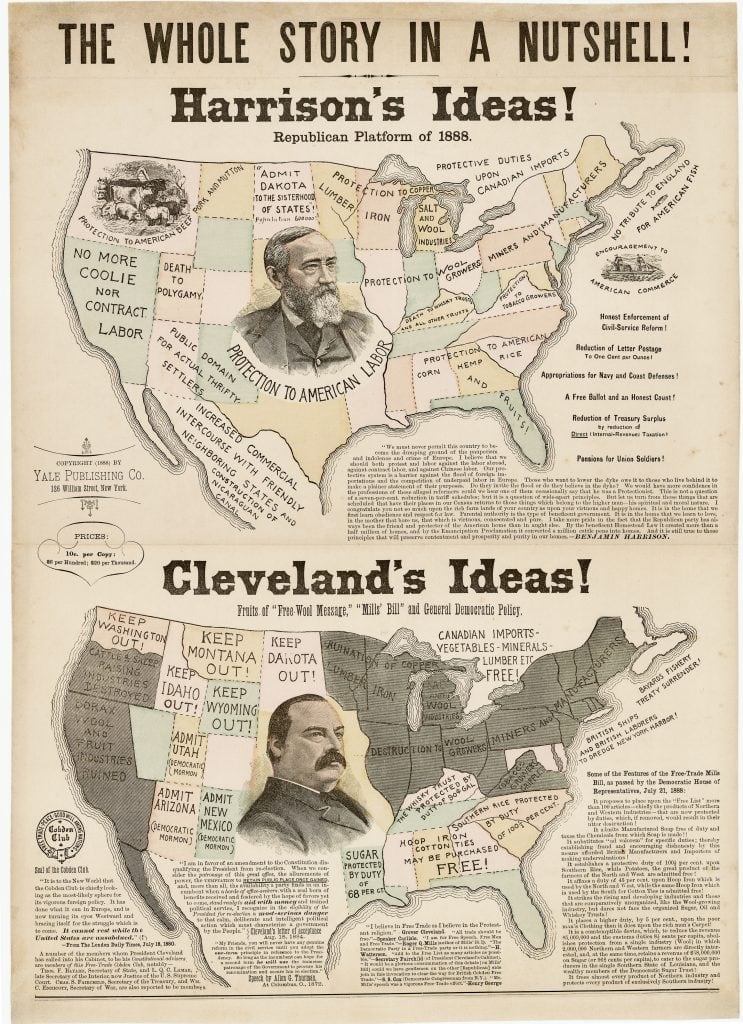

During the 1888 election, whiskey was a major issue driving the voters. The political parties used the divisive issue to their advantage. The back and forth over who would eliminate corruption and uphold morality was dizzying.
- Do you want to get rid of whiskey and all the corruption that goes along with it? Vote for Grover Cleveland and the folks on Democratic ticket! They’ll get rid of those pesky liquor taxes that make the government so dependent on liquor for revenue!
- Wait, NO! Those Democrats want to give Americans access to “free whiskey!” If you’re a good person and a supporter of temperance, you can’t allow that! Vote for Benjamin Harrison and the Republican ticket!
- Absolutely NOT! The Republicans are too cozy with the liquor men and that Whiskey Trust! They want to allow the whiskey men to run the government! They aren’t true friends of temperance! Vote Democrat!
- Don’t listen to THAT! The Democrats are promoting reduced tariffs on foreign goods and the American consumer will be less likely to buy American-made goods! Vote Republican! But the Republicans want higher tariffs and the consumer will be left picking up those added costs!
Another major consideration for voters became, “Do we get rid of the Internal Revenue Service?” The government only created the excise to pay for the Civil War, right? The need was no longer there! But, how could anyone ignore all that revenue coming in?! Doesn’t keeping the cost of liquor high with taxes discourage abuse of whiskey? Wouldn’t lowering the cost to the consumer make him buy more of it? Or does the Whiskey Trust benefit from the taxes and the involvement of the government?
These issues heavily influenced the election. Years later, Congressmen that claimed to be pro-temperance deftly straddled both arguments. Keeping the cost of liquor high for the producers and the consumer was considered a very anti-liquor stance. Yet, keeping liquor money out of Washington was of the utmost importance to those who remained anti-Whiskey Trust. It was very hard to know which side was making more sense. Republican Benjamin Harrison, great-grandson of William Henry Harrison, lost the popular vote but won in the electoral college. He unseated the first Democratic president since the Civil War and went on to raise those tariffs and enforce the Sherman Anti-Trust Act. It could be argued that Harrison helped to increase the influence that whiskey men had in Washington…Politics can be a tricky business and that whiskey money was…well, it wasn’t going anywhere any time soon.
Unfortunately for Harrison, his high tariffs didn’t sit well with the public as the prices of American consumer goods soared. He only served one term and Cleveland was re-elected in ‘92. Grover Cleveland became the only American president to serve 2 non-consecutive terms. All of this political maneuvering was taking place as the whiskey industry was booming. While the Whiskey Trust was no more, it reformed itself into a corporation with several subsidiaries, unloaded its undesirable assets, and grew more powerful. It’s interesting to think how different things would have been if politics hadn’t become so entangled with excise. What would have happened if the country had successfully rid itself of Internal Revenue? Would Prohibition have still been such a politically charged debate without the money behind whiskey? What do you think?